Latest News
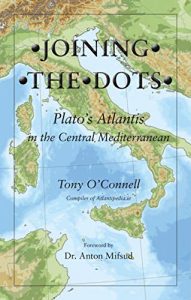
Joining The Dots
I have now published my new book, Joining The Dots, which offers a fresh look at the Atlantis mystery. I have addressed the critical questions of when, where and who, using Plato’s own words, tempered with some critical thinking and a modicum of common sense.Read More »
Tall-el-Hammam
Ancient Cities and Civilisations
Ancient Cities and evidence of their civilisations are continually being unearthed all over the world.
“In the study of the ancient world, a City is generally defined as a large populated urban center of commerce and administration with a system of laws and, usually, a regulated means of sanitation.” This is not the only definition, as there are many other factors that can be used to justify the description of `city’.(c)
If Plato’s description of Atlantis as an urban-centred society is factual and the features of the city, which he has recorded, are not just transferred from his own age, using literary licence, then we must look to the earliest cities for possible clues to the location and nature of Plato’s city of Atlantis. November 2012 saw a report(a) of a previously unknown city unearthed in Jordan at Tall-el-Hammam that may have been the hub of a city-state dated to 1800-1540 BC. This time span was later extended to range 2500-1540 BC, along with claims, by some, that the site may be the remains of Sodom(d) !
However, this is ‘small beer’ when compared with the claims of other cities such as Jericho (9000 BC) or Damascus (9000 BC) which claims to be the world’s oldest continuously inhabited city. The discovery of Göbekli Tepe seemed to push the date of human structures back to 9600 BC, but as yet, no urban centre that can be linked with the development of that site has been found!
Although Plato dated the time of Atlantis to 9,000 ‘years’ before Solon’s visit to Egypt, the suggested date has been heavily criticised, as it proposes a war between Atlantis and Athens & Egypt, millennia before either existed as structured societies.
Of related interest is a recent paper that describes how “ancient human settlements function in much the same way as modern cities.”(b)
(a) https://www.archaeologica.org/NewsPage.htm link broken)
(b) www.sciencedaily.com/releases/2015/02/150220142611.htm