Latest News
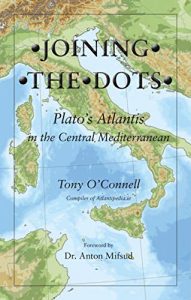
Joining The Dots
I have now published my new book, Joining The Dots, which offers a fresh look at the Atlantis mystery. I have addressed the critical questions of when, where and who, using Plato’s own words, tempered with some critical thinking and a modicum of common sense.Read More »
Rudbeck, Olof
Olof (Olaus) Rudbeck (1630-1702), was a 17th century nationalistic writer from Uppsala, Sweden (a very powerful nation at that time). He was a professor of botany and anatomy, 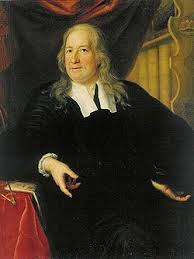 and was one of two discoverers of the lymphatic vessels. He also had an interest in astronomy, taught mining and fortification theory and was Sweden’s first field archaeologist.
Olaf published Atlantica between 1679 and 1702, in Latin and Swedish [1646], , which placed Atlantis, not altogether surprisingly, in Sweden. This was a massive 2500 page work(b), published with the financial help of the Swedish King Carl XI, in which he offered 102 ‘proofs’ to support his thesis. Atlantica included a map showing Uppsala as Atlantis(a). He also contended that Swedish was the root tongue of all languages!
Rudbeck built his Atlantis theory on a number of details, including references to the Icelandic Eddas.
- He assumed that the mythical Swedish king Atle was the original Atlas,
- He linked the Swedish Atlefjell (Atle’s Mountain) with the Atlas Mountains and an old name for Sweden was Atland, which crops up in the Oera Linda Book,
- He cited Sweden’s large copper deposits as one of his proofs of his country’s identity with Plato’s Atlantis.
It is also of interest that Rudbeck was an early proponent of the idea that the ‘years’ referred to by Plato were in fact originally Egyptian ‘lunar cycles’ and concluded that Atlantis was destroyed circa 1500 BC.
Rudbeck also noted that the Greek word ‘nesos’ could mean ‘island’ OR ‘peninsula’, the latter being applicable to Sweden. He argued that the ‘Pillars of Heracles’ was a designation formerly used to refer to a number of locations. Rudbeck claimed that the Øresund Strait between Sweden and Denmark was the site of the Atlantis ‘Pillars’.
It should be noted that Rudbeck’s theory was a development of the earlier ideas of another Swede, Johannes Bureus (1568-1652), a runic scholar, also born near Uppsala.
Half a century after Rudbeck’s death, a fellow Swede, Johannes Jacobi Eurenius, wrote Atlantica Orientalis[1320], published in 1751, in which he placed Atlantis in the Holy Land and argued forcefully against Rudbeck’s Swedish location.
*However, another two centuries were ro pass before a comparably comprehensive study of the Atlantis question was undertaken by Ignatius Donnelly. The passage of time has demonstrated both to be heavily flawed.*
In recent years, Gunnar Eriksson, professor emeritus of the History of Science and Ideas at Uppsala University, published the first Swedish biography of Rudbeck. He also compiled a shorter version, in English[529], which looked at Rudbeck’s 17th century ‘proofs’ that Sweden was Plato’s Atlantis. David King of the University of Kentucky has published[530] a further look at this remarkable, if eccentric individual.
Stephen P. Kershaw has commented[1410.193] that Rudbeck’s Atlantica ”was written while Lutheran Sweden was still coming to terms with the abdication in July 1654 of ‘Queen of the Swedes, Goths and Vandals’, and her conversion to Roman Catholicism. For the Protestant Rudbeck, the Atlantis project was part of an attempt to champion Swedish nationalism, both politically and religiously; annexing Atlantis, which the Catholic/Mediterranean world had so often used to assert its own supremacy, and moving it to Protestant Sweden was an ingenious move.”
A modern review(c) of Rudbeck’s work by Magnus Alkarp, another Swede, has offered a more generous assessment of his methods, finishing with the following comment – “But leaving aside these dreams of Atlantis, we can simply state that Rudbeck’s hypotheses were rarely aimless fragmentary ideas, thrown out at random. On the contrary, when he combines antiquarian observations with topography, local folklore and written sources Rudbeck becomes a figure of genius – even when he is completely wrong.”
Alfred Nobel, the inventor of dynamite and after whom the annual Nobel Prizes are named, was a direct descendant of Rudbeck.
(a) http://web.archive.org/web/20230921214910/https://www.raremaps.com/gallery/detail/0027gh/Eastern_Sweden_including_Stockholm_and_Upsala_Upsala_shown_as_Platos/Rudbeck.html
(b) https://www.journals.uchicago.edu/doi/abs/10.1086/358528