Latest News

NEWS September 2023
September 2023. Hi Atlantipedes, At present I am in Sardinia for a short visit. Later we move to Sicily and Malta. The trip is purely vacational. Unfortunately, I am writing this in a dreadful apartment, sitting on a bed, with access to just one useable socket and a small Notebook. Consequently, I possibly will not […]Read More »
Joining The Dots
I have now published my new book, Joining The Dots, which offers a fresh look at the Atlantis mystery. I have addressed the critical questions of when, where and who, using Plato’s own words, tempered with some critical thinking and a modicum of common sense.Read More »
Brasseur de Bourbourg, Charles Etienne
Charles Etienne Brasseur de Bourbourg (1814-1874) was born in 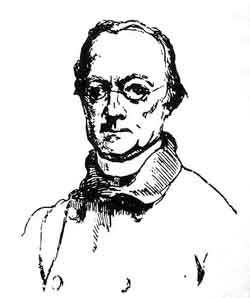 Bourbourg, near Dunkirk, France. He entered the priesthood and in 1845 he left for Canada and was for a short time professor of ecclesiastical history at Quebec. He worked as a missionary in Mexico and Central America where he developed an intense interest in the native South Americans and their origins. In 1859 he published a history of the Aztecs.
Hubert H. Bancroft (1832-1918), the American historian, noted[1319.125-132]+ that initially, Brasseur was highly sceptical of the reality of Atlantis, but as his studies deepened he became an enthusiastic believer.
Brasseur de Bourbourg’s ability to track down rare manuscripts was legendary. In 1865, he discovered some of Bishop Diego de Landa‘s lost documents. He studied the thoroughly flawed interpretation of Mayan hieroglyphics by de Landa, produced in the 16th century and proceeded to develop his own faulty translation. While working on the Maya texts, he thought he had discovered the word Mu, which he claimed was the name of an inundated land with other features similar to Atlantis and proposed that they were the same. He wrote copiously on this association, without any real evidence except his own deluded ideas.
He concluded that the Maya were originally from Atlantis, based on Plato’s description of Atlantean culture. This view was expressed in his 1868 book, Quatre Lettres sur le Méxique[1450]+.
In an 1866 offering[1506]+, he recorded his study of the Mayan monuments, particularly Palenque. The illustrations for this book were executed by Jean-Frédérick de Waldeck.
Brasseur also translated local languages into Roman script and perhaps his most important contribution was a French translation of the Popul Vuh, the sacred book of the Quiché branch of the Maya, which was published in 1861. An English translation is now available on the Internet(a).
Nigel Davies has revealed[1635] that Brasseur, as well as Lord Kingsborough (1795-1829), concluded that the native Americans were the Ten Lost Tribes of Israel. Kingsborough spent a £40,000 fortune publishing The Antiquities of Mexico in nine huge volumes, an extravagance that landed him in a Dublin debtor’s prison for non-payment of bills relating to publication costs and sadly, he died there.
This idea of the Lost Tribes in America had been suggested centuries earlier by Diego de Landa (1524- 1579), the Franciscan bishop of Yucatán.
In the mid-19th century, Brasseur proposed that Atlantis had existed on a large landmass in the Atlantic of which Hispaniola is a remnant. He believed that this vast peninsula extended to the vicinity of the Canaries. This idea was based on his own, largely incorrect, interpretation of Mayan glyphs. The American Hyde Clarke and the Guatemalan doctor Paul Felix Cabrera shared similar location theories.
Jason Colavito has pointed out that Brasseur was probably the first to suggest the possibility that some form of Pole Shift led to the destruction of Atlantis(b). This idea was published in 1873 and is available in an English translation by Colavito(c).
After what he thought was a reference to a flooded land called Mu, one of his last conclusions was that Mu and Atlantis were the same and that Mu was the correct name for the flooded land. This fantasy led Augustus le Plongeon to revise this theory, suggesting that refugees from both Mu and Atlantis were the founders of the Mayan civilisation.
[1319.125-132]+ https://archive.org/details/nativeraces05bancrich (Vol.V) *
[1450]+ https://archive.org/details/quatrelettressur04bras *
[1506]+ http://gallica.bnf.fr/ark:/12148/bpt6k130466g *
(a) https://www.meta-religion.com/World_Religions/Ancient_religions/Central_america/popol_vuh.htm
(c) https://www.jasoncolavito.com/historical-chronology-of-the-mexicans.html