Latest News
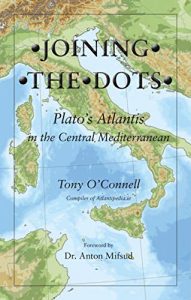
Joining The Dots
I have now published my new book, Joining The Dots, which offers a fresh look at the Atlantis mystery. I have addressed the critical questions of when, where and who, using Plato’s own words, tempered with some critical thinking and a modicum of common sense.Read More »
Denis Saurat
Giants
Giants are featured in the mythologies of many cultures globally. However, many of these same cultures also have ‘little people’ in their folklore (a). In Ireland, they were known as leprechauns.
Some commentators have striven to prove that a race of giants, as described in the Bible, such as the Nephilim, actually existed. This idea appeared to gain traction with the discovery of what appeared to be human bones in the 19th and early 20th centuries, which suggested above-normal stature. This has led to ongoing controversy. A study of the biblical Goliath and his family is relevant here(j).
There is a rare genetic form of giantism known as acromegaly. The BBC published an interesting article on the genetic mutation that causes the condition being more common in Mid Ulster in Northern Ireland than anywhere else in the British Isles(h). A scientific study confirmed this localised prevalence(i).
Wikipedia has noted that the giants’ bones were either the result of “hoaxes, scams, fabrications or the misidentifications of extinct megafauna”(b). It also notes that as early as 1934, the idea of giants was debunked by Aleš Hrdlicka, curator of anthropology at the Smithsonian Institution(l). The Smithsonian has since been accused of a cover-up by creationists and conspiracy theorists. However, that institution has been ably defended by more rational researchers, such as Jason Colavito (c)(d)(e). He returned to the subject again in August 2025(k), when it was reported that US congressman Eric Burlison, a creationist and UFO believer, suggested that there should be an investigation into the claim that the Smithsonian is hiding the bones of biblical giants!
A more recent development has been the linking of giants with Atlantis. I suspect that in some instances, Atlantis was added to the book titles, simply to enhance their saleability! The best known and probably the earliest extensive study came from Denis Saurat in the 1950s [536][537]. Since then, many, such as Tony Finlay(f), have touched on the subject. Richard Cassaro has advocated that megalithic structures in Italy had been built by giants from Atlantis(g). In the 2020s, the related book titles became more blatant – Giants of Atlantis[2115] (Patrick Chouinard, 2025), Giants and Atlantis[2114] (Laurent Glauzy, 2015). However, hard, irrefutable evidence is still lacking.
(a) Little people (mythology) – Wikipedia
(b) Giant human skeletons – Wikipedia
(c) http://www.jasoncolavito.com/1/post/2013/05/the-human-tendency-to-attribute-greatness-to-giants.html
(f) https://www.tonyfinlay.co.uk/
(g) Hidden Italy: The Forbidden Cyclopean Ruins (Of Giants From Atlantis?) – Richard Cassaro
(h) (BBC June 8, 2022) https://www.bbc.co.uk/news/uk-northern-ireland-61726811
(j) Hereditary Gigantism-the biblical giant Goliath and his brothers – PMC (nih.gov)
(l) The Oshkosh Northwestern. 3 March 1934.
Two Atlantises
Two Atlantises have been proposed by some commentators in order to explain some of the difficulties in Plato’s tex t. While the concept has been adopted in principle, the locations chosen vary.
Lewis Spence was probably the first to suggest the idea, followed by D. Duvillé and>Denis Saurat while more recently Jürgen Hepke has followed suit, suggesting that the first Atlantis was situated in the Bermuda Triangle and was destroyed around 9500 BC(a) and the second in the Mediterranean region which met its end circa 1250 BC(b)!<
The Russian Atlantologist Vladimir Scherbakov has promoted the idea of one Atlantis in the Atlantic and a second one incorporating major cities in the Eastern Mediterranean. He believed that migrants from the Atlantic original had peopled the second one.
It is clear that Plato describes two Atlantises separated by both time and geography. One was the Stone Age culture, briefly referred to by Plato and the other was the Bronze Age society that he describes in much greater detail. This apparent contradiction is easily explained if we accept that the original Atlantis was preliterate and in common with all very ancient peoples their achievements would have been clouded by the mists of time before committed to writing. Not unreasonably, to make up for a lack of detail, Plato would have overlaid the oral tradition with the attributes of an advanced civilisation of his own era, something that his audience could identify with. Such a literary device would have been within the bounds of artistic licence at that period.
Pauwels & Bergier in their book, The Morning of the Magicians[910], also proposed two Atlantises, an earlier one at Tiwanaku in the Andes and a later one in the Atlantic destroyed by “waters from the north”, recorded as Noah’s Flood in the Bible!
Not content with two Atlantises, Diego Marin, Ivan Minella & Erik Schievenin went one further in 2013, when they proposed three Atlantises in their book The Three Ages of Atlantis[972].
(a) http://web.archive.org/web/20170320150848/http://tolos.de/Book2.htm *
(b) http://web.archive.org/web/20170716221143/http://www.tolos.de/History%20E.htm (See Book 6) *
Saurat, Denis
Denis Saurat (1890-1958) was born in Toulouse and educated in Britain and France. He was a professor of French literature and lectured in both countries. He also had a lifelong interest in the occult among a wide range of subjects. One of his conclusi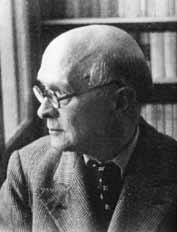 ons was that the worldwide megalithic remains of prehistory are evidence for the existence of a race of giants in our dim and distant past. His books[536][537] discuss this idea in detail, including supporting hints from the Bible and then link the entire concept with Plato’s story of Atlantis. Saurat also suggested that the use of electricity in ancient Egypt produced gleaming eyes in the statues of Isis in her temples. This suggestion of electricity in early Egypt was recently revisited by an engineer Andrew Hall. in a YouTube video(b).
Unfortunately, Saurat also seems to have borrowed many of the exotic concepts of Hans Hoerbiger, such as a succession of moons crashing to earth. Saurat has added little to the solution of the Atlantis mystery.
He suggests two Atlantises, one about 30,000 years ago, in the Andes around Lake Titicaca and the second 12,000 years ago described by Plato. Fortunately, Saurat is not arrogant and so in recognition of how scientific advances have a way of destroying previously held ‘certainties’, he admits in his summation (p118) that “despite all the evidence marshalled in this book, at no point can we say that we are absolutely sure.”
A further book[538] deals with the religion of the giants.
In 2003, the Canadian author, John Robert Colombo, published a biography of Saurat[626].
A blog(a) from Jason Colavito offers further details of Saurat’s daft ideas.
(a) https://www.jasoncolavito.com/blog/atlantis-and-the-nephilim-in-the-work-of-denis-saurat
(b) Andrew Hall: Electricity in Ancient Egypt | Thunderbolts – YouTube