Latest News
Joining The Dots
I have now published my new book, Joining The Dots, which offers a fresh look at the Atlantis mystery. I have addressed the critical questions of when, where and who, using Plato’s own words, tempered with some critical thinking and a modicum of common sense.Read More »
Erythraean Sea
Red Sea
The Red Sea, also known as the Erythraean Sea, lies between Egypt and Sudan in Africa and Saudi Arabia and Yemen in Asia.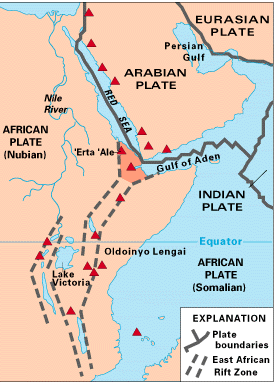 At the southern end lies the strait of Bab-el-Mandeb, considered by a few researchers as the location of the Pillars of Herakles.
Pliny the Elder refers to ‘Pillars’ at the end of the Red Sea and then, without pause, inexplicably mentions, Mauritania, Mt. Atlas and Cerne and shortly afterward to an island known as Atlantis!(c)
The Red Sea has entered the Atlantis debate mainly because the biblical Exodus has been linked with the 2nd millennium BC eruption of Thera and in turn to the Minoan Hypothesis. Unfortunately, a variety of dates are on offer for the time of the Exodus, which failed to help us pinpoint the date of the eruption, or enable the Minoan Hypothesis to provide a definitive date for the destruction of Atlantis.
For many, the Red Sea is associated with the biblical Exodus. However, the term used to describe it in the Hebrew text is ‘yam suph’, which does not mean Red Sea but ‘Sea of Reeds’ that left generations of bible students looking in the wrong place for evidence of the Exodus. Even the ‘Sea of Reeds’ explanation has been disputed in a paper by Bernard F. Batto on the Biblical Archaeology website(h). Consequently, researchers have turned their attention to other possible locations.
One example is a paper offered by Gary Byers, who concluded that today’s Ballah Lake in the northeast Nile, is the Exodus crossing point! However, the search is not over.
The ‘Red’ is often attributed to the seasonal blooming of a red-coloured bacterium. Some academics think that the cardinal points were ascribed colours, ‘red’ being south! Emilio Spedicato, in his paper(a) on the location of the biblical Ophir, points out that pinkish pumice, which is normal volcanic ejecta, can turn-red when iron within it is mixed with steam and oxygen.
Coincidentally, the presumed cradle of humanity is situated not too far from the Rift volcanoes and has drawn serious claims(b) that they may have played a part in the evolution of hominids!
The oldest known map of the Red Sea, referred to as the Nuzi Map, has its origins traced back to 120 years before the Flood of Noah(d)! George & Dana Brown, a father and son team from Florida, refer to the Red Sea as the Edenic Valley, to the east of which, in northwest Saudi Arabia, Cain’s city of Chanoch had lain and also where, according to the Browns, Noah’s Ark landed(f)!
(a) https://2010-q-conference.com/ophir/ophir-27-10-09.pdf
(b) https://www.seeker.com/volcanic-eruptions-led-to-emergence-of-first-humans-2052178636.html
(d) http://web.archive.org/web/20240413034120/https://www.angelfire.com/fl/BriansHouse/nuzimap.html
(h) Red Sea or Reed Sea? – The BAS Library (biblicalarchaeology.org)
Erythraean Sea
The Erythraean Sea, as referred to by Herodotus (Histories Bk I.202) derives its name from the Greek for ‘red’. To the ancient Greeks, ‘Erythraean’ was a term used to refer to the Red Sea as well as the Persian Gulf and Indian Ocean. There is an ancient Persian tradition(a) that the Phoenicians migrated from the shores of the Erythraean Sea. This view is echoed at the very beginning (I.1) of The Histories of Herodotus.
The 1st century AD Periplus of the Erythraean Sea[1214] (translation by W.H. Schoff) makes it quite clear that the term refers to the region of the Indian Ocean. This can be read online(b).
Michael A. Cahill contends[0819.751] that the Black Sea was the Erythraean Sea referred to in the Book of Enoch.
Even more ‘exotic’ is the claim by W.C. Beaumont (see map) that the English Channel was in fact the Erythraean or Red Sea, along with the relocation of many other places mentioned in Exodus to sites in Britain.
It is claimed by some writers that Erythraean is an alternative name for the ‘Sea of Atlantis’. R. Cedric Leonard offers the following translation: “but the Caspian Sea is by itself, not connected to the other sea. For the sea navigated by the Greeks, also that outside the Pillars called the Atlantis Sea and the Erythraean, are one and the same”. Both Leonard and Anton Mifsud claim that this passage demonstrates that Herodotus identified the Erythraean with the Atlantis Sea. However, a careful reading of the context clearly shows that what Herodotus was describing was the extent to which the world’s oceans were connected, even though the Caspian was landlocked. Africa had already been circumnavigated eastward from Egypt on the instruction of Pharaoh Necho II around 600 BC, demonstrating the connection between the Mediterranean and the Red Sea.
Furthermore, if ‘the sea navigated by the Greeks’ is interpreted as the eastern Mediterranean, it could be used to support a Central Mediterranean location for the Pillars of Heracles. This remains an interpretation rather than a conclusion compelled by Herodotus’ text.
In turn, this would identify the western Mediterranean and/or Tyrrhenian Sea as the ‘Sea of Atlantis’, complementing Plato’s description of Atlantis extending as far as Tyrrhenia and Libya. It is worth noting that Giorgio Grongnet de Vasse envisaged the Island of Atlantis occupying the Gulf of Syrtis off the coast of Libya and designated the sea to the west of Malta as ‘Mare Atlantico Antico’ or the ancient Atlantic Sea.