Latest News
Joining The Dots
I have now published my new book, Joining The Dots, which offers a fresh look at the Atlantis mystery. I have addressed the critical questions of when, where and who, using Plato’s own words, tempered with some critical thinking and a modicum of common sense.Read More »
Andalusia
Andalusia is the second largest of the seventeen autonomous communities of Spain. It is situated in the south of the country with Seville as its capital, which was earlier known as Spal when occupied by the Phoenicians.
However, there is now evidence that near the town of Orce, the remains of the earliest hominids to reach Europe have been discovered. These remains have now been dated to 1.6 million years ago according to a November 2023 article on the BBC website(g).
Andalusia is thought to take its name from the Arabic al-andalus – the land of the 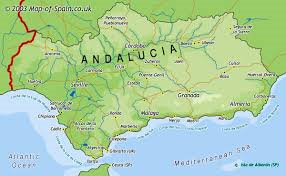 Vandals. Joaquin Vallvé Bermejo (1929-2011) was a Spanish historian and Arabist, who wrote, “Arabic texts offering the first mentions of the island of Al-Andalus and the sea of al-Andalus become extraordinarily clear if we substitute these expressions with ‘Atlantis’ or ‘Atlantic’.”[1341]
Andalusia has been identified by a number of investigators as the home of Atlantis. It appears that the earliest proponents of this idea were José Pellicer de Ossau Salas y Tovar and Johannes van Gorp, in the 17th century. This view was echoed in the 19th century by the historian Francisco Fernández y Gonzáles and subsequently by his son, Juan Fernandez Amador de los Rios in 1919. A decade later, Mrs E. M. Whishaw published [053] the results of her extensive investigations in the region, particularly in and around Seville. In 1984, Katherine Folliot endorsed this Andalusian location for Atlantis in her book, Atlantis Revisited [054].
Stavros Papamarinopoulos has added his authoritative voice to the claim for an Andalusian Atlantis in a series of six papers(a) presented to a 2010 International Geological Congress in Patras, Greece. He argues that the Andalusian Plain matches the Plain of Atlantis but Plato clearly describes a plain that was 3,000 stadia long and 2,000 stadia wide and even if the unit of measurement was different, the ratio of length to breadth does not match the Andalusian Plain. Furthermore, Plato describes the mountains to the north of the Plain of Atlantis as being “more numerous, higher and more beautiful” than all others. The Sierra Morena to the north of Andalusia does not fit this description. The Sierra Nevada to the south is rather more impressive, but in that region, the most magnificent is the Atlas Mountains of North Africa. As well as that, Plato explicity stated (Critias 118b) that the Plain of Atlantis faced south while the Andalusian Plain faces west!
During the same period, the German, Adolf Schulten who also spent many years excavating in the area, was also convinced that evidence for Atlantis was to be found in Andalusia. He identified Atlantis with the legendary Tartessos[055].
Dr Rainer W. Kuhne supports the idea that the invasion of the ‘Sea Peoples’ was linked to the war with Atlantis(f), recorded by the Egyptians and he locates Atlantis in Andalusian southern Spain, placing its capital in the valley of the Guadalquivir, south of Seville. In 2003, Werner Wickboldt, a German teacher, declared that he had examined satellite photos of this region and detected structures that very closely resemble those described by Plato in Atlantis. In June 2004, Antiquity Vol. 78 No. 300 published an article(b) by Dr Kuhne highlighting Wickboldt’s interpretation of the satellite photos of the area. This article was widely quoted throughout the world’s press. Their chosen site, the Doñana Marshes were linked with Atlantis over 400 years ago by José Pellicer. Kühne also offers additional information on the background to the excavation(e).
However, excavations on the ground revealed that the features identified by Wickboldt were smaller than anticipated and were from the Muslim Period. Local archaeologists have been working on the site for years until renowned self-publicist Richard Freund arrived on the scene, and spent less than a week there, but subsequently ‘allowed’ the media to describe him as leading the excavations.
Although most attention has been focused on the western end of the region, a 2015 theory(d) from Sandra Fernandez places Atlantis in the eastern province of Almeria.
Georgeos Diaz-Montexano has pointed out that Arab commentators referred to Andalus (Andalusia) north of Morocco as being home to a city covered with golden brass.
Quite a number of modern Spanish authors have opted for Andalusia as the home of Atlantis, such as G.C. Aethelman.
Karl Jürgen Hepke has an interesting website(c) where he voices his support for the idea of two Atlantises (see Lewis Spence) one in the Atlantic and the other in Andalusia.
(a) https://www.researchgate.net/search?q=ATLANTIS%20IN%20SPAIN%20I
(b) https://web.archive.org/web/20230322185427/https://atlantipedia.ie/samples/archive-3135/
(c) http://web.archive.org/web/20191227133950/http://www.tolos.de/santorin.e.html
(d) https://atlantesdehoy.wordpress.com/2015/08/06/hola-mundo/
(e) The Archaeological Search for Tartessos-Tarshish-Atlantis – Mysteria3000 (archive.org)
(f) Lehrstuhl für theoretische Physik II (archive.org)
(g) (BBC Nov 15, 2023) https://www.bbc.com/travel/article/20231114-orce-spain-the-site-of-europes-earliest-settlers