Latest News
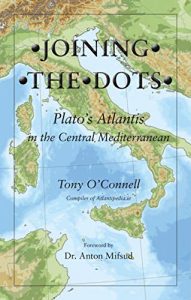
Joining The Dots
I have now published my new book, Joining The Dots, which offers a fresh look at the Atlantis mystery. I have addressed the critical questions of when, where and who, using Plato’s own words, tempered with some critical thinking and a modicum of common sense.Read More »
Doñana Marshes
Atlantis Project, The
The Atlantis Project is a website dedicated to gathering theories on Atlantis(a) . It is written by Robert Longley, an American researcher and poet with four books of verse already published. From my own experience, I appreciate the amount of work that has gone into assembling this site, so I am reluctant to be too critical of his project.
However, Longley follows the von Däniken idea that the Nasca Lines were identified as landing strips, that Puma Punku is 14,000 years old, as the long-discredited Arthur Posnansky proposed and claims that the late Richard Freund discovered evidence of Atlantis in the Doñana Marshes of southern Spain, which he didn’t.
Longley also seems confused by details in Plato’s Atlantis, when he offers the following gem – “Atlantis ended up being attacked by Asia and Europe.”(b)
For me, the entire site appears to smack of inadequate research, along with a degree of gullibility.
Daily Express (UK)
The Daily Express is a well-known British tabloid newspaper. Together with its sister publications, The  Sunday Express and its online Express.co.uk, it has recently set a new record for the number of ‘might be Atlantis’ articles published, all with the byline of Callum Hoare. During the first three weeks of 2019, he has managed to produce four stories suggesting four different locations for Atlantis – Doggerland(a), Malta(b), Azores(c) and the Bahamas(d). But I did not have to wait long for the next regurgitation from Hoare, with another piece mined from a recent Amazon Prime documentary, where the Atlantis in the Canaries theory is reviewed (21.1.19)(e). I note that Hoare was also the author of similar BS Atlantis stories for another alleged UK newspaper, The Daily Star. The quality of research continues to be abysmal, citations are often years old, facts are mangled and quite misleading. Definitely ‘Fake News’.
Unfortunately, this outpouring of nonsense continued on in 2020. June 30th saw the ‘Express’ publish another article(f) by Hoare with an “Atlantis Located” headline. This gem begins by repeating the view of ‘expert’ Matthew Sibson, who advocates Rockall as the site of Atlantis and then switches to the opinions of Christos Djonis, who claims the Aegean Sea as the home of Atlantis. According to Hoare, in this instance, Djonis refers to the research of Mark McMenamin of around 25 years ago, who noticed on some Carthaginian gold staters of the fourth century BC, that they had tiny engravings which he subjectively interpreted as rough maps showing both Asia and America and centred on Sardinia(g). This, according to Djonis, indicates the possibility that the Greeks may have had knowledge of America!
Djonis and Hoare were obviously unaware that in 2000, McMenamin was obliged to confirm that the coins in question were fakes(k) as revealed in his book, Phoenicians, Fakes and Barry Fell [1738].
Furthermore, Djonis is contradicted by the clear statement of Herodotus that the Greeks only knew three continents, Europe, Asia and Libya (Africa)(h). Finally, if Djonis thinks that Atlantis was located in the Aegean, what has America got to do with his theory?
July 2020 saw Hoare pollute the Express with another ‘Atlantis Found’ piece, this time locating it off the coast of Cornwall(j). This story is a quarter of a century old and a few years ago, its credibility and even the existence of the institution to which its original author, Viatcheslav Koudriavtsev, was supposed to belong to, was brought into question(i).
Hoare ended the year with another pathetic attempt(l) to revive interest in the Minoan Hypothesis, as well as the failed claim that the Spanish Donana Marshes held the remains of Atlantis or Tartessos!
In January 2021, he continued his recycling of old Atlantis claims, with the 35-year-old story of the submerged rock formation off Yonaguni, in Japan(m). Later in the same month we were regaled with yet another “Atlantis Found?” headline(n), which led on to report that the remains of another submerged city had been discovered off the Greek island of Zakynthos. No direct link with Atlantis was claimed!
(g) https://www.researchgate.net/publication/236000049_Cartography_on_Carthaginian_Gold_Staters
(h) Herodotus, Histories 4.42.
(i) https://shimajournal.org/issues/v10n2/k.-Hallerton-Shima-v10n2.pdf
National Geographic
National Geographic or Nat Geo are the registered trademarks of the National Geographic Society and are now, sadly, part of the Murdoch communications empire. Its magazine and TV channel enjoy global recognition. Undoubtedly, NG has enhanced our view of the world around us. One piece of NG trivia is that the word ‘tsunami’ first appeared in an English language publication in the September 1896 edition of National Geographic Magazine.
In May 1922, NG published its first picture of Stonehenge. A century later it returned to this remarkable monument for its cover story in its August 2022 edition. It highlights how the use of new technologies has greatly enhanced our knowledge of the site and the people who built it. Jim Leary, a lecturer in field archaeology at the University of York, admits that “a lot of the things we were taught as undergraduates in the 1990s we know now simply aren’t true.” This beautifully illustrated article is a useful update on developments at this huge UNESCO World Heritage Site.
Generally, NG has avoided controversy, but not always(a), so it will be interesting to see how its new chief, James Murdoch, a climate change denier(b), will deal with the NG views on the subject up ’til now(c). However, for me, it was something of a surprise when NG tackled the subject of Atlantis.
In 2004, NG News published a short article(d) highlighting the theories of Ulf Erlingsson and Rainer Kühne, who, respectively, were advocates for Ireland and Spain as Atlantis locations. Also in 2004, Zeilitsky and Weinzweig claimed to have found submerged man-made structures near Cuba and subsequently sought US government funding for further research there. It has been suggested that NG objected and further exploration did not take place! In 2006, NG gave the Atlantis in America theory of Zapp & Erikson an airing(e).
However, in 2012, Andrew Collins offered a different account of the Zelitsky funding difficulties(m).
In a short 2011 article(l)., NG trotted out the now generally abandoned idea that Atlantis had been a continent. The idea was obviously later dumped by NG as well when James Cameron et al. went looking for Atlantis in Malta, Sardinia and Santorini in 2016.
December 2012 saw NG publish an article on Doggerland, without any reference to the suggestion that there might be an Atlantis connection. NG has also voiced the scepticism of well-known commentators, such as Robert Ballard and Charles E. Orser jnr(f).
However, I find that the NG treatment of Atlantis is inconsistent. In October 2011 an anonymous article(k) on one of their sites, entitled The Truth Behind Atlantis: Facts, declared that Atlantis was continental in size (and so must have been located in an Ocean?) This is based on a misinterpretation of the Greek word meison. Nevertheless last year NG had Simcha Jacobovici, remotely guided by James Cameron, scouring the Mediterranean, from Spain to Sardinia, Malta, and Crete for evidence of Atlantis. This attention-seeking exercise found nothing but a few stone anchors that proved nothing and inflicted on viewers an overdose of speculation!
NatGeo TV aired a documentary(g) in 2015 relating to earlier excavations in the Doñana Marshes of Southern Spain by a Spanish team and partly hijacked by the late Richard Freund. A new NG documentary, hyped with the involvement of James Cameron and Simcha Jacobovici, was filmed in 2016 and later broadcast at the end of January 2017. Initially, it was thought by Robert Ishoy to be in support of his Atlantis location of Sardinia, but at the same time, Diaz-Montexano was convinced that his Afro-Iberian theory was to be the focus of the film. To coincide with the airing of the new documentary, D-M has published a new book, NG National Geographic and the scientific search for Atlantis[1394] with both English and Spanish editions.
Jason Colavito was promised a screener but had the offer subsequently withdrawn. One wonders why.
Once again, NG promotes the region of the Doñana Marshes as a possible location for Atlantis(i), based on rather flimsy evidence, such as six ancient anchors found just outside the Strait of Gibraltar. They estimate the age of the anchors at 3,000-4,000 years old. unfortunately, they are not marked ‘made in Atlantis’. Rabbi Richard Freund, never afraid to blow his own shofar, makes another NG appearance. Jacobovici throws in the extraordinary claim that the Jewish menorah represents the concentric circles of the Atlantean capital cut in half, a daft idea, previously suggested by Prof. Yahya Ababni(k).
What I cannot understand is why this documentary spends time dismissing Santorini and Malta as possible locations for Plato’s Atlantis and at the same time ignoring the only unambiguous geographical clue that he left us, namely that the Atlantis alliance occupied part of North Africa and in Europe the Italian peninsula as far as Tyrrhenia (Tuscany) and presumably some of the islands between the two.
Overall, I think the NG documentaries have done little to advance the search for Atlantis as they seem to be driven by TV ratings ahead of the truth. Perhaps, more revealing is that Cameron is not fully convinced by the speculative conclusions of his own documentary.
Jason Colavito, an arch-sceptic regarding Atlantis, has now published a lengthy, scathing review(j) of NG’s Atlantis Rising, which is well worth a read. While I do not agree with Colavito’s dismissal of the existence of Atlantis, I do endorse the litany of shortcomings he identified in this documentary.
For me, NG’s credibility as a TV documentary maker has diminished in recent years. Just one reason is the “2010 National Geographic Channel programme, 2012: The Final Prophecy, enthused about an illustration in the Mayan document known as the Dresden Codex (because of where it is now kept), which was claimed to show evidence of a catastrophic flood bringing the world to an end in 2012. This illustration included a representation of a dragon-like figure in the sky spewing water from its mouth onto the Earth beneath, which has been taken by some, although by no means all, experts in Mesoamerican mythology to indicate the onset of a terminal world-flood. However, no date was given, so the link with 2012 is entirely spurious (Handwerk, 2009; Hoopes, 2011).”(n)
(a) National Geographic Shoots Itself in the Foot — Again! (archive.org)
(b) https://gizmodo.com/national-geographic-is-now-owned-by-a-climate-denier-1729683793
(d) http://web.archive.org/web/20220121054050/https://atlantipedia.ie/samples/archive-3582/
(e) https://www.dcourier.com/news/2006/oct/02/atlantis-theory-by-local-anthropologist-makes-nat/ (not available in EU)
(f) http://science.nationalgeographic.com/science/archaeology/atlantis/
(g) https://www.youtube.com/watch?v=nyEY0tROZgI & https://www.youtube.com/watch?v=choIyaPiMjo (no longer available)
(h) https://mosestablet.info/en/menorah-tablet.html
(l) https://channel.nationalgeographic.com/the-truth-behind/articles/the-truth-behind-atlantis-facts/ (link broken) See: The Truth Behind: Atlantis (TV Movie 2011) – IMDb *
(m) Cuban ‘Atlantis’ Cover-Up Solved?, page 11 (archive.org)
(n) Doomsday Cults and Recent Quantavolutions, by Trevor Palmer (q-mag.org) (about 2/3rds down page)
Goropius Becanus, Johannes
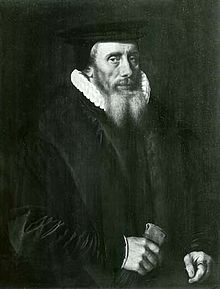 Johannes Goropius Becanus (1519-1572) was a Dutch physician and linguist, although he was of the opinion that the Dutch language had been used in the Garden of Eden and was the mother of all other languages(c) ! We hope his knowledge of medicine was better than his linguistics. He was also one of the first to propose the Doñana Marshes of Andalusia as the site of Atlantis(a)(b). This can be found in the Hispanica section of his Opera[1437] published posthumously in 1580.
Goropius also declared that Tartessos was the biblical Tarshish and was the capital of Plato’s Atlantis.
(a) https://en.m.wikipedia.org/wiki/Location_hypotheses_of_Atlantis#South
(b) https://en.m.wikipedia.org/wiki/Location_hypotheses_of_Atlantis#South
(c) https://en.m.wikipedia.org/wiki/Johannes_Goropius_Becanus
Cuevas, Manuel
Manuel Cuevas is a Spanish researcher from Sanlucar de Barrameda (Cadiz), who claimed in 2015(a) to  have identified the location of what is possibly a lost civilisation in the area of Pinar de La Algaida, covering an area of about 8 square kilometers (5 square miles.) beside the Guadalquivir River in Spain. This location is not far from the better known Atlantis candidate of the Doñana Marshes.
Another site(b) quotes Cuevas as saying, ‘I believe 99 percent that I have finally found the lost city of Atlantis’.
(b) Spanish researcher claims to have found Atlantis (archive.org)
Bonsor, George (Jorge)
George (Jorge) Edward Bonsor (1855-1930) was born in France to 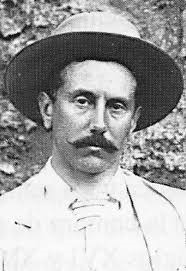 British parents, but spent most of his life working as an artist and archaeologist in Spain. In the 1920s, Bonsor and Adolph Schulten searched in The Doñana Marshes for Tartessos. An account of Bonsor’s work is available online(a), in Spanish, but it translates quite well with Google. Despite comments recently attributed to Professor Richard Freund, [0879.71] I have no evidence that Bonsor equated Tartessos with Atlantis as Schulten did.
A number of his books, in Spanish, are available online(c).
Karl Juergen Hepke has written an extensive paper (in English) on the work of Bonsor(b).
(a) https://www.juntadeandalucia.es/educacion/vscripts/wbi/w/rec/3121.pdf
(b) search_for_tartessos.E (archive.org)*
Freund, Richard
Professor Richard Freund (1955-2022) was an American academic who entered the Atlantis debate.  Freund was a rabbi and the director of the Greenberg Centre for Judaic Studies at the University of Hartford. He was the author of Digging Through the Bible, in which he recounts his experiences excavating in the Middle East.
Freund ‘led’ (see below) an expedition of Spanish, American and Canadian scientists in 2009 and 2010 to investigate satellite images of the Doñana Marshes, showing circular and rectangular features, discovered by Werner Wickboldt in 2003. National Geographic has included the findings of the expedition in a 2011 documentary entitled, Finding Atlantis(a).
Another documentary, along with a transcript, which also ‘stars’ Freund, entitled “Atlantis – The Lost City” is available(e). Freund has also inveigled his way into the 2017 National Geographic documentary, Atlantis Rising.
Frank Joseph, the former leader of the American Nazi Party, probably jealous of the media coverage that Rabbi Freund got, following the 2011 documentary, disputed Freund’s conclusions in an article in the Atlantis Rising magazine, Number 88.
Freund believed that these structures discovered at Doñana are related to Atlantis/Tarshish. Freund has pointed out that the large amounts of methane emanating from the site suggests that only a tsunami could have suddenly trapped the large quantities of organic matter required to generate that quantity of methane!
However, a more sober view is presented by Juan Villarias-Robles, a Spanish anthropologist working with the Spanish team investigating the Doñana site. He recounts(b) how Professor Freund spent less than a week on the site and was not the leader of the Hinojos Project.
“Richard Freund was a newcomer to our project and appeared to be involved in his own very controversial issue concerning King Solomon’s search for ivory and gold in Tartessos, the well-documented settlement in the Donaña area established in the first millennium BC.
He became involved in what we were doing and provided funding for probes through his connections with National Geographic and Associated Producers.
He left and the film company told us the documentary would be finished in April or May. But we did not hear from him and are very surprised it has appeared so soon and makes such fanciful claims.”(b)
Concerning the features identified by Wickboldt, Villarias-Robles explains that so far anything found has been smaller than anticipated or dated to the Muslim period. He declares that no remains of Tartessos or Atlantis have been found.
Jason Colavito has published a free ebook entitled Golden Fleeced (f) in which, among other matters, he discussed Freund’s 2011 claim of Atlantis in Spain. He notes that “apparently Freund dropped in to an active Spanish archaeological investigation into an actual ancient city, ongoing since 2005, and has hijacked it to generate publicity for his research into the connection between Solomon and Atlantis to prove the Bible true.”
Equally moderate are the comments of archaeologist, Philip Reeder, from the University of South Florida, who is also unconvinced that Atlantis has been found(c).
Furthermore, the respected Greek historian, Ephorus, described Tartessos in his day (4th century BC) as still being a rich source of tin, copper and gold(d). Since he wrote this long after Solon’s visit to Egypt, and even longer since the sinking of Atlantis, it would appear to rule out identifying Atlantis with Tartessos.
Freund’s ideas on Atlantis, Tartessos and the Phoenicians were later discussed in his 2016 book,
(a) https://www.youtube.com/watch?v=ytVENC4td8k (link broken)
(c) Will we ever really discover Atlantis? (gizmodo.com)
(e) https://www.amazon.co.uk/Atlantis-Lost-City-OH-Krill/dp/B01MED39GY
Doñana Marshes *
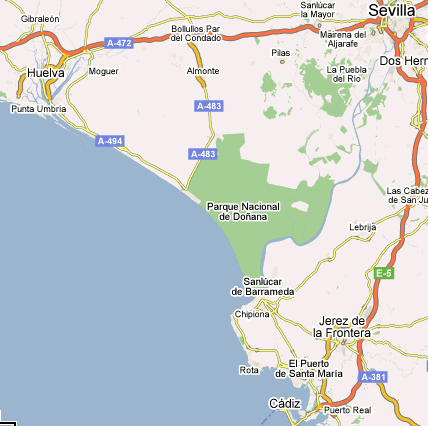 The Doñana Marshes, a National Park in the valley of the Andalusian Guadalquivir River was linked with Atlantis over 400 years ago by José Pellicer. During the 1920’s George Bonsor and Adolph Schulten searched the area for evidence of Tartessos. After that interest in the marshes waned until a few years ago when Werner Wickboldt identified circular and rectangular features in the Park from satellite images, which he claimed a possibly Atlantean.
Richard Freund, a professor from the University of Hartford, claims to have led a team to study the area and has had work included in a March 2011 National Geographic documentary, Finding Atlantis. However, Spanish anthropologist Juan Villarias-Robles who has worked on the site for some years has declared(a) that Freund did not lead the investigations on the site and in fact spent less than a week there. Wickboldt’s images turned out to be either smaller than expected or were from the Muslim period. Evidence for Tartessos or Atlantis has not been found.
(a) Muddying up Atlantis – Roger Catlin | TV Eye (archive.org) or see Archive 2122*
Spain
Spain has been favoured as a probable location of Atlantis by a sizeable number of investigators, principally Spanish and other Europeans. For about a century, attention has been focused on the region of Andalusia, although one writer, Jorge María Ribero-Meneses, has opted for Cantabria in Northern Spain. The most vocal proponent today of a Spanish Atlantis is arguably Georgeos Diaz-Montexano, who has just begun the publication of a series of books on the subject.
Richard Freund is a latecomer to the question of Atlantis and recently foisted himself on the excavators in the Doñana Marshes, announcing that the site was related to Atlantis/Tarshish and garnering widespread publicity ahead of the publication of his own book on Atlantis!
One commentator has suggested that the origin of the name of Spain itself was derived from the Semitic language of the Phoenicians, who arrived in Spain around 1500 BC. They referred to the region as ‘span’ or ‘spania’, which means hidden! Cadiz, equated with Plato’s Gades, is frequently cited as the oldest colony of the Phoenicians. The date appears to be based on tradition rather than hard evidence. Archaeology puts the date closer to 800 BC.
The oldest Phoenician remains, found in the vicinity of Malaga, were discovered during the recent building of a second runway. The occupation of the site is dated to around 700-600 BC.
In September 2012 a report(a) revealed that at the La Bastida site in Murcia, Spain, fortifications dated to 2,200 BC had been discovered and heralded as “Continental Europe’s First Bronze Age City” and “is comparable only to the Minoan civilisation of Crete”.
Late November 2018 saw Merlin Burrows (M.B.), a British surveying company, claim to have found Atlantis in Spain close to the Doñana National Park (b). M.B.’s head of research, Tim Akers, claimed that “laboratory analysis of material recovered from Spain showed evidence of a type of cement not seen before.” This and evidence of ancient metallurgy were enough for him to conclude that it had come from Atlantis! So now it seems that if something previously unknown is found, it must come from Atlantis! That something has been found is not doubted, but it is more likely to have been the Phoenicians, who extensively exploited the rich mineral deposits in the region. Another website offers a more extensive report from Merlin Burrows(g) as well as a review of other failed Atlantis claims.
The report contains wild speculation, particularly when claiming that this new discovery dates back to the end of the Last Ice Age when Athens or Egypt did not have structured societies and so could not refer to Plato’s Atlantis. There is little doubt that a number of interesting sites over the 100-mile stretch have been located, but they do not include Atlantis. Expect a flurry of media responses (c) for a while as they await the next wild claim. Meanwhile, Merlin Burrows ha had their publicity, or so I thought. However, M.B. has now embarked on a further campaign promoting a series of new Atlantis films called Atlantica, employing director Michael Donnellan to drum up interest(j). His most recent outing in October 2021 on Spanish TV stirred P.R.Cantos to examine some of Donnellan’s dubious claims(k). Not unexpectedly, further criticism came from sceptic Carl Feagans(l).
Mid 2025 saw Merlin Burrows return with another claim of having located Atlantis and teased us with a promise of an upcoming three-part documentary series that will reveal all! (t) In July 2025, Donnellan endeavoured to revive interest in the idea of a Spanish location for Atlantis near Cádiz(u), once again receiving widespread media attention(v). We must keep in mind that finding the submerged remains of buildings under water is not unusual, but claiming that they are the remnants of Atlantis requires a whole new level of evidence.
The Doñana National Park was extensively investigated some years ago and was the subject of a National Geographic documentary, Finding Atlantis. Nothing remotely Atlantean was found. For my part, I prefer to follow Plato and point to the only territory named by him as Atlantean, namely Southern Italy, N.W. Africa and some of the many islands in the region.
The Doñana story took a new turn yesterday (22.11.18) when Georgeos Diaz-Montexano published a paper on the Academia.edu website, in Spanish and English (d)(e), which completely debunks the foundations of the Merlin Burrows claim. It is interesting to read about the arrogance of the video makers when challenged by Diaz-Montexano. The following day, Díaz-Montexano re-posted (f) the paper with additional comments by Professor César Guarde-Paz, a distinguished Spanish academic, who also denounced the Merlin Burrows claims.
Stavros Papamarinopoulos is also a keen supporter of locating Atlantis in Spain, outlining his reasons in a series of papers(m-r) delivered to the 12th International Congress of the Geological Society of Greece, Patras, 2010.
In March 2024, the UK’s Express newspaper published a report(s) from Spain offering yet another suggestion that Atlantis may have been discovered off the coast of Spain in the region of Cadiz!
“A team of Spanish researchers recently reported the discovery of several large concentric circular structures, resembling artificial walls, which are believed to share similarities with Plato’s accounts of the enigmatic lost city of Atlantis.
Although Mercedes de Caso Bernal, a renowned historian and archaeologist involved in the discovery, made it clear that the team would not disclose the exact location of their findings, he confirmed that the structures measured up to five meters in height and stretched as long as 450 meters.”
(a) La Bastida unearths 4,200-year-old fortification, unique in continental Europe | ScienceDaily
(d) ¿LA ATLÁNTIDA FINALMENTE DESCUBIERTA? Leer el artículo en https://atlantisng.com/blog/la-atlantida-finalmente-descubierta-segun-nuevo-documental-britanico-hoax-publicitario-o-el-mayor-de-los-ridiculos/ (link broken Dec. 2018)
(e) Página no encontrada — La Atlántida Histórica (archive.org)
(f) Página no encontrada — La Atlántida Histórica (archive.org)
(g) https://peopleus.blogspot.com/2011/07/has-real-lost-city-of-atlantis-finally.html
(l) How the Discovery of ‘Atlantis’ Made Big News Then Faded Away – Archaeology Review (ahotcupofjoe.net
(m) (PDF) ATLANTIS IN SPAIN II (researchgate.net)
(n) (PDF) ATLANTIS IN SPAIN III (researchgate.net)
(o) (PDF) ATLANTIS IN SPAIN IV (researchgate.net)
(p) (PDF) ATLANTIS IN SPAIN I (researchgate.net)
(q) (PDF) ATLANTIS IN SPAIN VI (researchgate.net)
Blázquez y Delgado-Aguilera, Antonio
 Antonio Blázquez y Delgado–Aguilera (1859-1950) was a Spanish historian and geographer, who, in 1923, edited Avienus’ Ora Maritima, which identified Tartessos as having been located near the mouth of the Spanish Guadalquivir River. This was a year before Adolf Schulten published his book on the subject. He was a friend of George Bonsor, who also sought Tartessos in the Doñana Marshes.