Latest News

NEWS September 2023
September 2023. Hi Atlantipedes, At present I am in Sardinia for a short visit. Later we move to Sicily and Malta. The trip is purely vacational. Unfortunately, I am writing this in a dreadful apartment, sitting on a bed, with access to just one useable socket and a small Notebook. Consequently, I possibly will not […]Read More »
Joining The Dots
I have now published my new book, Joining The Dots, which offers a fresh look at the Atlantis mystery. I have addressed the critical questions of when, where and who, using Plato’s own words, tempered with some critical thinking and a modicum of common sense.Read More »
Malta *
Malta is a small densely populated archipelago, strategically situated in the Central Mediterranean between Sicily and Tunisia. There is a claim that early Maltese were Phoenicians who came from Lebanon around 3000 BC(i). It was reported in 2007 that nearly 30% of “modern-day Maltese share a genetic link with the ancient Phoenicians.” (ay)
However, the Phoenicians do not appear to have been the first, as temple building on the islands began centuries earlier and before that, there is evidence to show a Neanderthal presence there (See below).
At a 2003 Conference in Malta Anton Mifsud concluded his paper(at) entitled Ancient Maltese Skulls – Disease, Genetics and Population Migrations with the following,
“In conclusion, it would seem that this earliest evidence of the genetically determined and transmitted disease known as Thalassaemia in Malta five thousand years ago contradicts the present view that the earliest immigration into Malta derived from Sicily in 5200 BC. The study of genetic distances and ancient population migrations rather points to much earlier immigration of humans from North Africa into Malta and onto Europe around 43,000 BC. Archaeologically documented human remains and artefacts dated to this period of time lend further support to this view.”
It was not until the 1st millennium BC that there was a formal occupation of Malta by the more militant successors of the Phoenicians, the Carthaginians and many centuries later the Knights Templar.
Nowadays, Malta has a highly recognisable national flag adorned with an eight-pointed cross, now universally accepted as Maltese. However, this symbol has a long history and greater geographical spread than generally realised. Gary A. David has written an informative paper(af) on the Maltese Cross and its variants as found around the world. He pointed out its use in the Americas by the ancient Olmecs and laid great emphasis on its place in the inherited culture of the Hopi Indians.
An unexpected reference to this national symbol can be found in the writings [1848.71] of Maurice Chatelain, an ancient astronaut theorist, who claimed that within a 450-mile radius of the Aegean island of Delos there were 13 mystical sites, which when connected by straight lines formed a perfect Maltese Cross(ah)!
It is claimed by some that the name ‘Malta’ is derived from the Phoenician word ‘Maleth’, meaning refuge. However, the name is more generally accepted to be taken from the Greek word for honey meli and was later known to the Romans as Melita, the Latin equivalent. Malta was renowned in ancient times for the quality of its honey, which may explain why the light-fingered, 1st century BC Roman governor, Verres, stole 400 amphorae of it (about 2800 gallons) over three years.
Eire Rautenberg offers a more speculative Malta/Bee association claiming “The first humans came 11,000 – 6,000 BC. BC, historically very early. ‘Malet’, the Punic name for Malta , means refuge and the Greek interpretation ‘Melita’ of -melas means a honeyed dark goddess. The bee structure of the Megalithic Temples of Malta everyone can study at the temple stones; they sometimes look like huge honeycombs that have been proven to be artificially created. The owl as a symbol of the dark, all-seeing eye goddess can also be found on a stele of the megalithic temple Hagar Qim on the southwest coast(av).
Malta, for most Christians, is where St. Paul was shipwrecked on his way to Rome, but even this is disputed by the inhabitants of Mljet in the Adriatic, who make an identical claim. This is not the only serious controversy concerning St. Paul that has arisen. His actual existence has been called into question or at the very least, the age in which he lived, in an article by a chronology revisionist, Gunnar Heinsohn, entitled Saint Paul: Did he Live Once, Thrice or Not at All(ar)?
Today, Malta is a stepping-stone between North Africa and Europe. At the time of the last Ice Age it was probably joined to Sicily but whether it was also joined to North Africa is a matter for debate. This possibility depends on the extent to which the level of the Mediterranean was lowered by the 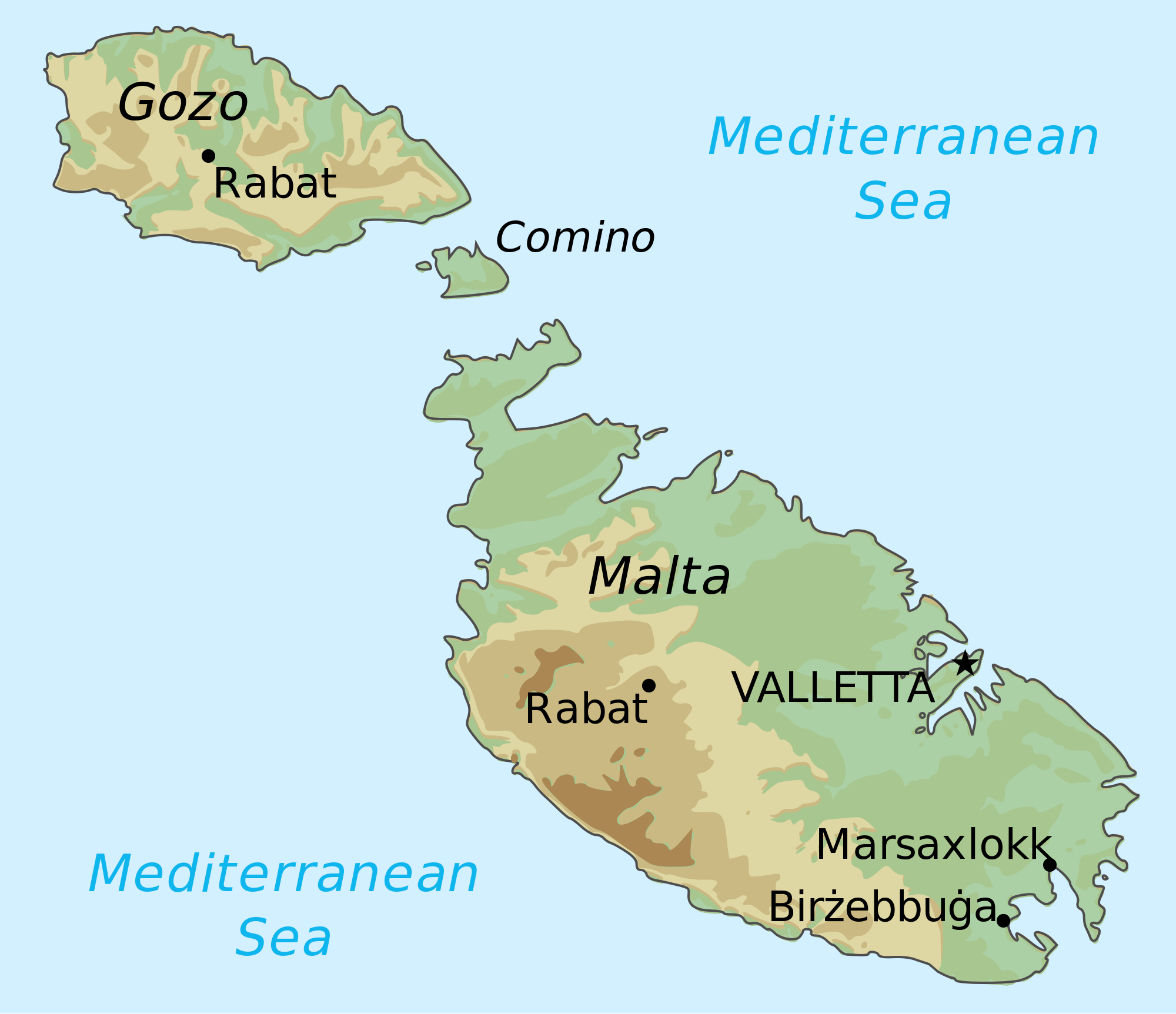 growth of the Ice Age glaciers and whether that lowering was exacerbated by the existence of a land bridge between Southern Spain and Morocco. Vittorio Castellani offers[224] a possible map of the enlarged Sicily extending to include the Maltese Islands, leaving a narrow strait between an expanded Malta and the coast of Tunisia. Dr Anton Mifsud has researched ancient maps of the Central Mediterranean region and demonstrated that the early cartographers knew the Maltese archipelago as having a much larger area than at present. G.N. Godwin expressed similar views regarding an earlier enlarged Maltese landmass in his Guide to the Maltese Islands [1592].
The Greek text describes Atlantis as being ‘pro’ in front of or before the Pillars of Heracles rather than ‘meta’ beyond them, which would fit a description of Malta being in front of (east of) Pillars if as suggested, they were located at the Strait of Sicily.
Commenting on this preposition, J. Warren Wells points out that “Plato uses ‘pro’ seven times in Timaeus and twice in Critias. In eight of these cases, it is used in relation to ‘time before’ rather than ‘place before.’It is used only one time in relation to place or position. That single occurrence is where he refers to the island of Atlantis being before (pro) the straits at the Pillars of Heracles.” He concluded that at the very least, close proximity is implied[783].
W.K.C. Guthrie in A History of Greek Philosophy (Vol.5, p245)[946] comments similarly – “’ before the entrance’ I take to mean that it was at no great distance, but the volcanic Azores have a better geographical claim to be the remains of Atlantis than any spot within the Mediterranean.”

Dr Anton Mifsud
Guthrie recognised that Plato was describing the island of Atlantis as being near the Pillars of Heracles, but based on the assumption that the Pillars were situated at Gibraltar, he was forced to opt for the Azores as the location of Atlantis, even though at a distance of 1,100 miles they cannot in any way be described as being “at no great distance” from the ‘Pillars’. Consideration of other known locations, particularly in the Central Mediterranean, that was also, at different times, designated as the Pillars of Heracles, show several islands, including Malta, close to each nominated site.
Malta is home to some of the earliest and most spectacular megalithic monuments in Europe, with some finely carved art, particularly spirals as can be seen in Michael Ridley’s book[1711]. Unfortunately, many more have been lost, Lenie Reedijk in her recent book, Sirius – the Star of the Maltese Temples [1631], lists 100 megalithic sites on Malta & Gozo, of which two-thirds have been lost [p.14/15]. She also contends that the temple building in Malta was spread over a much longer period than generally accepted, beginning as early as 9150 BC and lasting until 4250 BC.
A 2022 paper(ax) by Huw S. Groucutt et al. explores the apparent abrupt ending of the Temple Building Period in Malta and its coincidence with what is known as the 4.2 ka Event, when many societies collapsed in the Mediterranean region. The paper discusses the possible causes, including climate change, which seems to be the most advocated explanation. However, conflicting opinions combined with a shortage of data have prevented the authors from arriving at a firm conclusion. Nevertheless, this paper is a useful addition to the literature on the subject.
2200 BC is also the date for the destruction of Atlantis ln Malta proposed by Anton Mifsud.
Many attempts have been made to link the orientation of the temples with various astronomical bodies. A limited study by John Cox proposed a connection with moonrise (t). Mario Vassallo favours an association with the winter solstice sunrise(u). Klaus Albrecht also identifies [1632] the winter solstice sunrise as his preferred orientation(v). Reedijk offers a far more radical explanation for the alignment of all the temples, namely that they were directed at Sirius, the brightest star in the night sky at that time. However, precession slowly broke that alignment. Reedijk noted that “a star whose rising and setting point was aligned with a temple axis of a given monument at a given time will have moved out of its line of sight in the course of several centuries. When this happened the need would have been felt to build another monument with a slightly different orientation of its main axis, in order to be in line with the star again.”
What I do not understand is why, according to Reedjik, the Maltese temple builders continued to build their re-aligned monuments for over five millennia without simply modifying existing temples rather than engaging in the immense work involved in starting from scratch after every failure of orientation.
Tore Lomsdalen has an MA in Cultural Astronomy and Astrology from the University of Wales Trinity Saint David. He is now studying for his PhD in archaeology at the University of Malta. He has published several papers on the orientation of the Maltese temples some with a particular focus on Mnajdra(am)(an). He has now added a paper on the Academia.edu website on the possible use of archaeoastronomy to assist with the development of a building chronology for the temples at Mnajdra(aq).
In September 2021 a Canadian researcher, Irene Friesen Wolfstone published a paper(ao) in which she “hypothesizes an Afrocentric origin for the astronomical knowledge that informed the megalithic temple builders of Malta.” and explains that “using a cosmological epistemology, I hypothesize the cosmological principles that were expressed in the astronomical and matricentric design of Mnajdra.”
Carmelo Raymond Sant is a retired engineer and the author of two books [1701/2] concerning the Maltese temples and their function as calendars, which are supported by a fully illustrated website(y). His intense study of the temples and the evidence that over time their orientation changed, led him to conclude that within human experience some form of tectonic rotation south of Sicily has taken place. To quote Sant “two main anomalies became evident in the megalithic calendar. The first obvious one was related to alignment. Unknown geological events had taken place, which contradict the established view on plate tectonics (see micro-plate rotations). The second concerns Earth dynamics. The evidence in the design hints strongly to abrupt changes in the Earth’s axial tilt, in contradiction to established thinking.“(z)
Another Maltese writer who is sympathetic to the idea of Atlantis in the region of Malta is Joseph Serracino as revealed in a brief article(as).
Malta is home to some of the earliest and most spectacular megalithic monuments in Europe. Dr Mifsud has pointed out that the size and number of these ancient monuments are greater than an island of Malta’s present extent could be expected to produce. This view when combined with the mysterious ‘cart-ruts’ that run straight off cliffs, and then reappear on the opposite side of a bay or across open sea, all point to Malta having been a much larger landmass within the experience of man, namely, not earlier than 5000 BC. The cartruts.com website shows(d) the possible shoreline of Malta at 5000 BC and 8000 BC. The same site has a page on ‘torba’ an alleged prehistoric Maltese cement. The tiny island of Filfla three miles off the south coast of Malta had cart ruts visible on it before it was used for target practice by the British military(g). The clear implication was that it had been connected to the main island while it was inhabited. Furthermore, three miles offshore from Sliema on the north side of Malta submerged ruins of what is thought to be a temple (now named ‘Gebel Gol-Bahar’)(h) were discovered in 1999.
I expect that further discoveries will be made, but as it is, there is sufficient evidence to prove that when it was initially settled and certainly as late as some of the Temple Period, the archipelago had been considerably greater in extent than today. A short history of Filfla is worth a read(o).
An underwater study (2013) of the seafloor between Malta and Sicily revealed that the archipelago had been connected to Sicily by a 40 km wide land bridge, now submerged by rising sea levels following the last Ice Age(w).
In 2010, a former co-author of Mifsud’s, Charles Savona-Ventura, rather strangely, independently published a fourteen-page booklet, In Search of Atlantis[1332], in which he reiterated his support for Malta as Atlantis!
In 2014, it was reported(k) in the Times of Malta that a huge underwater canyon, previously unknown, with an extent eight times the size of the Maltese Islands, had been discovered in an area known as the Malta Escarpment. It was also found that the canyon had been active recently, highlighting the geological instability in the region. (The link below includes a short video clip).
In 1923, R. M. Gattefossé commented [314] that many of Malta’s ancient monuments were “Atlantean” in character, although he believed that Atlantis had been located in the Atlantic. Dr Mifsud attributes the earliest linking of Malta with Atlantis to the 16th-century writer, Bibischok. His manuscript is held in the National Library of Malta in Valletta.
However, it was over three hundred years before the suggestion was made again, when an anonymous German writer using the nom-de-plume of ‘Anacharsis’ published (in German only) a Handbook for Educated Travelers through Southern France, Switzerland, Italy and Greece to Corfu, Volume 2 ” published in 1839 (p. 109-112). The author, who is still unidentified, suggested that the Maltese archipelago was the tip of a great sunken land, probably Atlantis(au).
Shortly afterwards, in 1854, Giorgio Grongnet de Vasse, the renowned Maltese architect, proposed that the Maltese Islands were remnants of Atlantis. In 1910 the celebrated Maltese botanist, John Borg offered the opinion that Atlantis had been situated on the submerged land between Malta and North Africa [1132].
D. H. Childress reports that in 1922, the archaeologist, Joseph Bosco also supported this idea. Three-quarters of a century passed before the idea of a Maltese connection with Atlantis was again revived, in particular by the publication of two books, one by Anton Mifsud[209] and the other by Francis Galea[308], in English and Maltese respectively. Both of these books are the result of extensive investigation and have inspired others to continue their study. Graham Hancock was prompted to visit the island and gained material there for his popular book[274] on ancient flooded cities.
Mifsud is widely accepted as Malta’s leading atlantologist and was the principal author of Malta, Echoes of Plato’s Island, in which a very strong case was made for considering Malta as Atlantis. In 2017, he published Island of the Gods[1671] (available on the academia.edu website), which strengthened his Atlantis theories with complementary material. As can be seen from the bibliography here, Mifsud has written several books and papers concerning the history and prehistory of this strategically situated island and the endless procession of traders and occupiers – Neanderthals, Megalith Builders, Egyptians, Phoenicians, Carthaginians and Romans.
Another contributor to the study and literature of the island’s prehistoric origins that should be mentioned is the late Joseph S. Ellul. He was a Maltese teacher and the author of a paper, Malta’s Prediluvian Culture…,[289] that links the submergence of some of Malta’s monuments with Noah’s Flood, which he identified with the controversial idea of the breaching of a land bridge between Spain and Morocco.
While most researchers have focused on the extraordinary number of ancient monuments on the small archipelago, it might be worth considering what is not found on the islands, namely, anything to do with military action. There are no obvious defensive structures and no depiction of warriors or their weaponry. Everything seems to indicate a peaceful society, perhaps, as I and others have already speculated, it was originally a place of pilgrimage(m)(n) or some form of sanctuary!
Hubert Zeitlmair, a retired German real estate investor, is fascinated by the Megalithic remains on Malta, but unfortunately, he ascribes their existence to the intervention of alien visitors a la Zechariah Sitchin. He has outlined his views in a book[465], written in German with an English version promised in the future. Zeitlmair expands on a number of his outlandish claims on his website(f), UFOs, Nibiru as well as “the Atlantean ‘Cold Fire Fusion’ Power house in Malta that still generates Non-lethal High-Frequency Active Auroral Energy.” Similar waffle has been published in the first two books[783][947] of a trilogy by the late Francis Xavier Aloisio, who claims that the Maltese temples “are a Reservoir of Consciousness, so we need to start to look at the structures in a very different way. They were ‘charge compressors’, ‘energy generators’ and ‘power houses.’ In a word, they were ‘energy centres’ for planet Earth.”
Quite recently, Aloisio’s wife, Christine, also joined the ‘lunatic fringe’ and published The Crystal City of Atlantis [1846], which she claims is under Malta. The promotional blurb tells us how “The reader is taken through a remarkable chronicle of how they found Ashua.ra.ta.ra, the Crystal City of Atlantis and met the High Priest who shares with the author his wisdom and describes their Inner Earth Kingdom. The High Priest also reveals how he and his fellow Atlanteans fled there, after the last devastating flood of Atlantis.” For good measure, the author reveals that Lemuria had been situated in California in ancient times!
Anton Mifsud has noted that “Without the use of metal, the ancient Maltese were erecting the first domed structures of the world; these sanctuaries were also being built in accordance with an anti-seismic blueprint, and, amongst other designs, most if not all of these temples incorporated highly advanced acoustics that is still retained in the ‘closed’ surviving framework at the Hal Saflieni Hypogeum”(ab) Glenn Kreisberg, is an American researcher, who has investigated archaeoacoustics and has visited the Hypogeum and carried out experiments there(ac).
Linda Eneix has some interesting additional comments about the acoustics of the 5000-year-old Hypogeum and for good measure touches on the archaeoacoustics of Newgrange and Göbekli Tepe. Considering acoustics in general and music in particular she adds “Harvard Medical School neurologist and psychiatrist David Silbersweig says that music activates many different parts of the brain. The revelations are stunning but none so exciting as one from Johns Hopkins University, where researchers have identified a relationship between music and dopamine release.” (aw).
In 2020, it was announced that acoustic engineers from the University of Salford had demonstrated that Stonehenge had acoustic qualities that allowed “any sounds produced inside the temple would have been much less audible to anybody outside the circle, despite the monument almost certainly not having a roof.
The findings, therefore, suggest that any sounds generated by activities carried out inside the circle were not intended to be shared with the wider community. This reinforces theories suggesting that the potential religious activities conducted inside Stonehenge were reserved for an elite of practitioners, rather than for a wider communal congregation.”(ad)(ae)
Casey Terry notes [1542.36] that Pavel Smutny, a Czech researcher, who is an ardent promoter of the idea of ancient advanced technology, has gone further and proposed that the Maltese temple complexes “were used probably as generators of high-frequency acoustic waves. The purpose was (maybe) to arrange a communication channel between various islands”!(ag) A similar claim regarding the Maltese temples as acoustic communication centres is to be found in a paper written by Glenn Kreisberg (ab).
Another site(aj) noted that “There is no denying that a sophisticated school of architectural knowledge was already in place a thousand years before the Egyptians started building pyramids. (The same people who created Hal Saflieni also engineered a complete solar calendar in one of their above-ground megalithic structures, with solstice and equinox sunrise alignments that still function today.)”
The Hal Saflieni Hypogeum, mentioned above, has produced a mystery, a controversy and an accusation of conspiracy. When it was excavated several longheaded skulls were found. However, since the middle of the 20th century, most of these skulls have quietly vanished. Fortunately, Dr Anton Mifsud has not let the matter rest and tracked down some of these and in a detailed publication(ak) has explained: “that they have been intentionally hidden from the general public for various reasons, political, national and cultural for over a century.” Mifsud has now published the fourth(ap) in a series of books on these long-headed skulls and, no doubt to the disappointment of some, he concluded that “the Hal Saflieni Hypogeum skulls are alien, alien to the norm, but not alien as in extra-terrestrial.” Part three has already been published(ak) and parts one and two are in preparation.
The most recent and more rational support for a Maltese location has come from Albert Nikas, a computer engineer, who submitted a paper(b) to the 2008 Atlantis Conference. Sunday, November 19th, 2017 saw the publication of an article(l) by Nikas in Malta’s Sunday Independent, in which he describes his recent visit to many temples in the archipelago. He goes on to claim that he has located the ruins of an ancient city, just offshore, which he believes to have been the capital of Atlantis, not far from Valletta, the modern capital.
>Nikas reported his findings to Heritage Malta, providing them with images and coordinates, but, so far, has had no positive response. Nika is anxious that the site be confirmed by the authorities and then secured, but the apparent lack of interest from that quarter prompted him to conclude his article with the promise that “if I don’t hear anything from the authorities within a short time I will be obligated to reveal the location of the find to the Maltese people, after all, it is part of their history and they have the right to know about it.” Nothing has been heard of any revelation since them.<
Massimo Rapisarda submitted another paper to the same conference suggesting that Atlantis had been located in Sicily in the vicinity of the seaport of Marsala. That conference also heard Axel Hausmann identify a region that included part of North Africa and the area between Libya and Sicily as the home of Atlantis.
Alberto Arecchi, who also advocates a Central Mediterranean Atlantis noted that “We can identify in this system the “Heracles’ columns” of the ancient mythology (one of the two “columns” appears identifiable with the island of Malta).” (s)
I do not know what future investigations will reveal, but I am certain that they will demonstrate that Malta had a  more important part to play in the Atlantis story than is generally accepted today. The megalithic heritage of Malta predates that of Egypt by a millennium, considerably enhancing its candidacy as the location of Atlantis or at least part of that confederation. A wonderful panoramic view of some of the temples can be seen on the Internet(c).
The second largest of the Maltese archipelago, Gozo, is claimed by some to have been Ogygia the home of the mythical Calypso. Today, there is a cave overlooking Gozo’s Ramla Bay which, by tradition, is thought to be “the one where the beautiful nymph Calypso keeps Odysseus as a “prisoner of love” for seven years.” (x)
Gozo also claims to have the oldest free-standing temples in the world known as Ggantija. In the early 19th century a Danish-German artist painted a number of watercolours of the Ggantija area that “show stones and reliefs that have since been destroyed” (ai).
Many websites discuss the prehistory of Malta(a). One well-illustrated site(e) concentrates on the evidence of catastrophic events affecting the landscape of the archipelago in the distant past. A newspaper report of June 2016(j) pushes back the prehistory of Malta by 30,000 years with the claim that Neanderthals may have lived on the island, assuming that it was an island then! In 2016, Mifsud published Dossier Malta – Neanderthal [1587] in which he outlines the evidence for the existence of Neanderthal Man on Malta.
Malta also produces a Cabernet Sauvignon wine in the town of Marsaxlokk appropriately, but not uniquely, called Atlantis.
On Sunday, January 13th, 2019. the UK’s Sunday Express delighted its readers with TWO Atlantis stories(q)(r). The online edition of the paper offered a video clip of the Maltese island of Filfla, while the commentator told us that Plato had said that a devastating earthquake had destroyed Atlantis it was finished off by an eruption. This is factually incorrect as Plato never mentioned an eruption. Then, as if that was not enough, the same edition of the same newspaper has another story by the same ‘reporter’, with an ‘Atlantis Discovered’ headline claiming that the remains of an ancient 8,000-year-old city, home to ‘tens of thousands’ of people, had been discovered in the North Sea, in a huge region sometimes referred to as Doggerland. The reporter cites Dr Richard Bates in support of this account. Unfortunately, the 2012 comments by Dr Bates never mentioned ‘a city’, only a vast area occupied by ‘tens of thousands’ of people, presumably early farmers(p). These two accounts are a sad reflection of the quality of media reporting today.
I cannot leave this subject without mentioning Julian Cope’s The Megalithic European [1780], described as “the most extensive study of European megalithic sites to date.” This beautifully illustrated book offers information on 300 sites, including Malta, visited by the author, some of which were new to me.
For an overview of Malta’s history See [1714], [1713], [1715] and [1716].
See Also: Mediterranean Sea Level, Axel Hausmann, Kevin Falzon.
(a) Prehistory about malta, from stone age to bronze age (archive.org)
(b) https://atlantisinmalta.blogspot.ie/
(c) https://www.maltain360.com/#110012638 (link broken)
(d) See: https://web.archive.org/web/20190102032648/https://cartruts.com/
(e) Was Malta the island of Atlantis, the island of Temples that had a Catastrophe? (archive.org)
(f) See: https://web.archive.org/web/20160401190453/https://www.maltadiscovery.org/en/
(g) http://www.ancient-wisdom.com/cartruts.htm
(h) ?ebel ?ol-Ba?ar – Wikipedia *
(i) https://web.archive.org/web/20180810185353/https://kadmous.org/wp/malta-and-lebanon/
(m) See: https://web.archive.org/web/20160823204054/https://www.templesofmalta.com/ggantija.htm
(o) https://www.guidememalta.com/en/all-you-need-to-know-about-the-mysterious-islet-of-filfla
(p) https://www.bbc.com/news/uk-scotland-edinburgh-east-fife-18687504
(t) https://academic.oup.com/astrogeo/article/49/1/1.7/307209
(u) ‘The Location of the Maltese Neolithic Temple Sites’, Sunday Times, 26 August 2007, pp. 44–46.
(v) https://www.geestkunde.net/tabula-smaragdina/malta-tempels-aardgodin.shtml
(w) Largest part of the Maltese islands is today under water – study – MaltaToday.com.mt (archive.org)
(y) Melitamegalithic (archive.org) (slow to load)
(z) About – Melitamegalithic (archive.org)
(aa) https://migration-diffusion.info/article.php?id=530
(ab) https://www.academia.edu/39950048/THE_ELITE_LONGHEADS_OF_MALTA?sm=a
(ac) https://grahamhancock.com/kreisbergg6/
(ae) https://phys.org/news/2020-09-uncovering-acoustical-properties-stonehenge.html
(af) https://www.academia.edu/8661701/The_Maltese_Cross_Hopi_Indian_Version_of_a_Knights_Templar_Symbol
(ag) https://www.academia.edu/36532579/malta29042018_odt
(ah) https://www.mail-archive.com/ctrl@listserv.aol.com/msg28306.html
(ai) Goddess History by Marija Gimbutas (archive.org)
(aj) Search for Archaeoacoustics Malta Select Archaeoacoustics – The OTS Foundation for Neolithic Studies
(ak) https://www.academia.edu/43811237/THE_MISSING_HYPOGEUM_SKULLS_OF_HAL_SAFLIENI
(al) EGYPT BEFORE THE PHARAOHS (gigalresearch.com)
(am) (99+) (PDF) Astronomy and Intentionality in the Temples of Mnajdra.
(ao) (99+) Mnajdra: Cosmology of the Sky | Irene Friesen Wolfstone – Academia.edu
(ap) (99+) (PDF) HAL SAFLIENI HYPOGEUM – THE ALIEN SKULLS | Anton Mifsud – Academia.edu
(ar) https://q-mag.org/st-paul-did-he-live-once-thrice-or-not-at-all.html
(as) https://timesofmalta.com/articles/view/is-malta-really-part-of-atlantis.35351
(at) https://www.academia.edu/3270896/Ancient_Maltese_Skulls_Disease_Genetics_and_Population_Migrations
(au) Malta was Atlantis – Atlantisforschung.de (atlantisforschung-de.translate.goog)
(av) Poseidon is not a Greek god! – Atlantisforschung.de (atlantisforschung-de.translate.goog)
(aw) https://www.academia.edu/63669239/Megaliths_Music_and_the_Mind_The_Latest_in_Archaeoacoustics
(ax) (PDF) The 4.2 ka Event and the End of the Maltese “Temple Period” (researchgate.net)
(ay) One-third Of Maltese found to have ancient Phoenician DNA – The Malta Independent