Latest News
Joining The Dots
I have now published my new book, Joining The Dots, which offers a fresh look at the Atlantis mystery. I have addressed the critical questions of when, where and who, using Plato’s own words, tempered with some critical thinking and a modicum of common sense.Read More »
Tyrrhenia
Goti, Marco
Marco Goti is the Italian author of The Island of Plato[1430] in which he attempts to demonstrate  that Atlantis was situated in Greenland. I say attempts because, in my opinion, he fails dismally. He starts by locating the Pillars of Heracles in the Atlantic, with one side being the basaltic columns at the Giants Causeway in Northern Ireland and their counterparts across the sea in Scotland’s Isle of Staffa. This idea was touted by W. C. Beaumont over sixty years earlier(a).
The Cyclopean Islands off the east coast of Sicily near Mt. Etna referred to by Homer in his Odyssey are also known for their basaltic columns. At Gunung Padang and Nan Madol there are also numerous columns with comparable volcanic origins.
Goti then moves on to Iceland, which he identifies as Thule and spends too much time describing a variety of unpronounceable locations there. He eventually heads for Greenland, which he contends must be Atlantis, as it is greater than Libya and Asia combined, ignoring that Plato was referring to might rather than size. Goti posits the huge plain described by Plato to have been situated in the centre of Greenland, ignoring the fact that ice cores dated to over 100,000 years have been identified there, and apart from which, the huge island is not submerged. He offers two papers with extracts from his book(b)(c) as well as some evidence of neolithic activity in Greenland(d).
Felice Vinci, who clearly offered some inspiration to Goti, wrote the Foreword to the book and also provided Goti with an archaic Athens in Sweden!
Goti decries other promoters of Atlantis theories for ignoring details in Plato’s account that don’t fit their particular ideas. He then moves Athens to Sweden, has Atlantis above water for hundreds of thousands of years, includes no elephants or two annual crops, and does not explain how Greenland Atlanteans controlled southern Italy as far as Tyrrhenia, all of which earns a thumbs down from me.
(a) https://www.theflatearthsociety.org/library/pamphlets/Is%20Britain%20the%20Lost%20Atlantis.pdf
(b) The Geometry of Atlantis according to Plato (1/2) – The Tapestry of Time (larazzodeltempo.it) (link Broken)
(c) The Geometry of Atlantis according to Plato (2/2) – The Tapestry of Time (larazzodeltempo.it) (link broken)
(d) Marco Goti – The Tapestry of Time (larazzodeltempo.it) (Link broken)
Magna Graecia
Magna Graecia is the term applied to those parts of southern Italy and  Sicily colonised by the Greeks, beginning as early as the 8th century BC. An interesting fact is that Philo of Alexandria (20 BC-50 AD) in his On the Eternity of the World(b) wrote: “Are you ignorant of the celebrated account which is given of that most sacred Sicilian strait, which in old times joined Sicily to the continent of Italy?” (v.139). The name ‘Italy’ was normally used in ancient times to describe the southern part of the peninsula(d). Some commentators think that Philo was quoting Theophrastus, Aristotle’s successor. This would push the custom of referring to Italy as a ‘continent’ back to the time of Plato. More recently, Armin Wolf (1935- ), the German historian, when writing about Scheria relates(a) that “Even today, when people from Sicily go to Calabria (southern Italy) they say they are going to the “continente.” This continuing usage is confirmed by a current travel site(c). I suggest that Plato used the term in a similar fashion and can be seen as offering a more rational explanation for the use of the word ‘continent’ in Timaeus 25a, adding to the idea of Atlantis in the Central Mediterranean.
Giuseppe Palermo, in his 2012 book Atlantide degli italiani is now bravely promoting the idea that Plato’s Atlantis was originally located beneath the town of Acri and the surrounding region of Calabria. He supports his claim by matching measurements provided by Plato with physical features around Acri(e). However surprising this idea may seem, it should be pointed out that according to Plato, Atlanteans had occupied southern Italy as far north as Tyrrhenia (Timaeus 25b & Critias 114c). If all this is not true, as a second prize, Acri can at least claim to be the birthplace of the famous American bodybuilder, Charles Atlas!
The Greeks began their gradual expansion westward between the 9th and 6th centuries BC, a development clearly illustrated on an excellent series of online maps(h). Understandably, they would have taken the shortest route from the Greek mainland to the heel of Italy and later on to Sicily. As they progressed with their colonisation, new limits were set, and in time, exceeded. I suggest that these limits were each in turn designated the ‘Pillars of Heracles’ as they expanded. I speculate that Capo Colonna (Cape of the Column) in Calabria may have been one of those boundaries.
Interestingly, 18th-century maps show up to five islands near the cape which are no longer visible(g), suggesting the possibility that in ancient times they could have been even more extensive, creating a strait perhaps matching Plato’s description. On the other hand, the Strait of Messina was one of the locations recorded as the site of the ‘Pillars’. Considering that mariners at that time preferred to hug the coast, I would opt for the Strait of Messina rather than the more frequently proposed Strait of Sicily. A strait is defined as a narrow sea passage, a description that seems inappropriate for the 96 miles separating Sicily from Tunisia.
For a brief history of the rise and fall of Magna Graecia, have a look at the classical wisdom website(f).
It is also noteworthy that there are a number of towns in Calabria where ancient Greek is still spoken(i). Similarly, back on the Peloponnese, the language of Sparta, Tsakonika, is still spoken by about 2,000 people in an area limited to 13 towns, villages and hamlets, located around the village of Pera Melana(j).
(a) Wayback Machine (archive.org)
(b) http://www.earlychristianwritings.com/yonge/book35.html
(c) Four Ways to Do Sicily – Articles – Departures (archive.org)
(d) article Name of Italy (profilbaru.com)
(e) https://www.atlantid.info/?page_id=539
(f) See: https://web.archive.org/web/20180824200049/https://classicalwisdom.com/magna-graecia-greater-greece/
(g) https://www.academia.edu/1152285/Discovery_of_Ancient_Harbour_Structures_in_Calabria_Italy_and_Implications_for_the_Interpretation_of_Nearby_Sites
(h) See: https://web.archive.org/web/20141105204103/https://learningobjects.wesleyan.edu/greek_colonies/
(i) http://www.madeinsouthitalytoday.com/mysterios-places.php
(j) (BBC Dec.16, 2020) BBC – Travel – The last speakers of ancient Sparta
Aldamiz, Luis
Luis Aldamiz (aka Maju) is an independent Basque researcher who has  concluded that the Atlantean Empire was at the centre of the VNSP (Vila Nova de São Pedro) culture in ancient Portugal(a)(b). Its capital Zambujal, was situated near the modern city of Torres Vedras, just north of Lisbon. He bases his idea on a number of topographical and historical parallels between the VNSP region and Plato’s description of Atlantis(c).
In order to have Plato’s account of the Atlantean War conform to his location theory, he suggests that the Mycenaean Greeks fought alongside the El Argar people in southeast Spain against the VNSP Atlanteans! The evidence for such a military alliance is at best tenuous or, more likely, purely speculative.
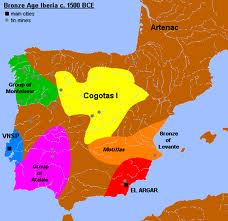 However, the idea is not as far-fetched as it might seem when combined with the views of W.Sheppard Baird who claims that Minoans had been the colonisers of Los Millares in Andalusia as early as 4000 BC. In due course, the culture of Los Millares was superseded by that of El Argar. This begs the question as whether the Mycenaeans who had succeeded the Minoans on Crete also replaced them in their Andalusian colonies!
Nevertheless, no matter how interesting the theories of Aldamiz and Baird may be, they have still to explain Plato’s claim that the Atlanteans ‘controlled’ Europe as far as Tyrhennia, along with part of North Africa, before their eastward invasion! Furthermore, the part that Egypt played in their alliance with Athens in the war with Atlantis is totally ignored by them.
(b) https://www.geocities.ws/luis_aldamiz/Atlantis/Atlantis.html
Corsini, Marco Guido
 Marco Guido Corsini (1954- ) is an Italian researcher who has produced yet another interpretation of the Phaistos Disk(a) as well as a number of online papers(b) (all in Italian) regarding the search for Atlantis. He identifies the Atlanteans(d) as the ‘Nordic’ Sea Peoples, a la Spanuth, and yet in another place he refers to Rome as the capital of Atlantis, which is interesting as Plato described the Atlantean domain extending as far a Tyrhennia(c), whose territory began just north of what was later known as Rome.
Corsini’s websites are in Italian only and when translated by Google, they are not the easiest to read. Unfortunately, Italians seem to rarely use paragraphs and Corsini has a rambling style, making lots of assertions but offering little evidence to support them.
Corsini ventures into strange territory when he claims that the now ‘missing’ Tulli Papyrus(e) describes a UFO sighting by ancient Egyptians(f) and also that he would like to find the Loch Ness Monster(g)!
A further insight into Corsini’s personality was provided in a recent email that he sent to me, which I include here in its entirety:
“ You are a stupid man. Do not know italian and misinterpret my works. Finish to mention me and my works. You are stupid.”
My only comment is that I would prefer to be stupid than boorish.
(a) https://web.archive.org/web/20251007194644/https://digilander.libero.it/marcoguidocorsini/rada.htm
(b) https://web.archive.org/web/20251206140729/https://digilander.libero.it/mgcorsini/index.htm
(c) Timaeus 25b & Critias 114c
(d) http://web.archive.org/web/20210211231904/https://digilander.libero.it/mgcorsini/atlantide.htm
(e) https://www.catchpenny.org/tulli.html
(f) https://web.archive.org/web/20251005210732/https://digilander.libero.it/marcoguidocorsini/tulli.htm
Elephants
Elephants are specifically mentioned by Plato as being indigenous to Atlantis. This must have significance for anyone trying to arrive at a credible location for Atlantis. For example, supporters of the Theran Atlantis School cannot show where such large animals could have lived on the small volcanic island. There are no physical remains, no frescos and no historical references. Rodney Castleden who supports the Minoan Hypothesis admits that “no raw elephant ivory has been found (on Thera) and very little in the way of worked ivory”[225.70]. He later speaks of the importation of ivory into Crete[p.172] having bravely denounced Plato’s description (Critias 115a) of herds of elephants on Atlantis as “false”[p.136].
Similarly, Spanuth’s Heligoland location would have been climatically unsuited to elephants. Spanuth himself admits that the elephant reference “is hard to explain“. Nevertheless, Felice Vinci who champions a Northern European origin for Greek mythology believes that Plato’s elephant reference may be a lingering memory of the woolly mammoths that inhabited Arctic regions as recently as 2500-2000 BC(t)(u). In the late 17th century Olof Rudbeck, recognising the problem that Plato’s reference to elephants presented for his Swedish Atlantis, argued that Plato had been speaking figuratively when describing the large voracious animals and had actually been referring to wolves, the Swedish word for wolf being ‘ulf’, which sounds like the beginning of ‘elephant’!!
E. J. de Meester recognised that Plato’s mention of elephants in Atlantis presented a problem for his proposed English location for Atlantis and struggled to explain them away. He flirted with the idea that the elephants were possibly mammoths or Scottish Highland cattle, but eventually settled for walruses!
Elephants in Western Europe were undoubtedly represented by mammoths, remains of which have been recovered from the North Sea – Doggerland and dated to around 40,000 years ago. Coincidentally, a tool made of mammoth bone, used for making rope, has also been dated to 40,000 years ago(i)(n). This discovery(s) by Nicholas Conard from the University of Tubingen was made shortly before Ashley Cowie published his interesting book[1454] on the history of rope-making. Further information on string, ropes and knots was published in March 2017(o). This ingenuity of our very distant ancestors, so often underestimated, is slowly being revealed by modern archaeology. In 2000, in the Czech Republic, it was discovered that woven cloth was being produced on looms 27,000 years ago(v). A few years later a team from Harvard’s Peabody Museum reported the discovery of fibres that ‘were spun, twisted or knotted’ and dated to at least 34,000 years ago(x). 2020 saw evidence emerge which suggested that even as far back as 41,000 – 52,000 years ago the Neanderthals had mastered the making of cords(w). Later the same year, further evidence was offered that string-making may have begun even earlier(y).
Allied to the demise of the Siberian mammoths is the often-repeated fib that when the remains were first discovered, their flesh was still fresh enough to eat, which has recently been debunked by Jason Colavito(j). He has also unearthed the truth behind that other canard relating to a Siberian mammoth, namely that fresh buttercups were found in its mouth(j). He has now(q) traced back the earliest reference to the frozen mammoths to George Cuvier in 1822 [1586.11].
Eckart Kahlhofer, in a forthcoming book[715] advocates a North-West European location for Atlantis, and suggests that where Plato referred to elephants he actually meant deer! Kahlhofer offers, as a simple explanation for this seemingly daft contention, the fact that the Greek for elephant, elephas, is very similar to the Greek elaphos which means deer. He claims that a simple transcription error by a scribe could have caused the mix-up.
The elk was the largest species of deer to be found in the northern hemisphere and is still to be found in Scandinavia. The Great Irish Deer which died out around 5500 BC had an antler span of 11ft and a maximum height of 10ft, though usually less. The tallest African elephant ever recorded was 13 feet at the shoulder, which would appear to give the elephant the edge over the deer heightwise. Furthermore, It is worth pointing out, again, that Plato described his elephants as the ‘largest and most voracious’ animal, so when we realise that an adult elephant eats 250-300 lbs a day, while a moose manages on 40-60 lbs, there seems to be no contest.
Gene Matlock in an attempt to bolster his Mexican location for Atlantis has suggested that Plato’s elephants were in reality the long-snouted tapirs of Meso-America!(c), an idea ‘borrowed’ from Hyde Clarke
While the elephant issue should not be dealt with in isolation it does serve to illustrate the difficulties involved in analysing Plato’s text. Consider the possibility that the early date of 9600 BC for Atlantis is accepted, then the islands that are too small today to accommodate elephants may have been considerably larger and sometimes connected to each other or a mainland during the Ice Age, when sea levels were lower, and consequently capable of supporting pachyderms. In this regard, Sundaland would have been the most suitable candidate. Not only would today’s South China Sea archipelagos have been a single landmass, but there would have been access to the region from the Asian mainland, home today to large numbers of elephants.
Strangely enough, even the Andes, considered by some as the home of Atlantis, reveal the fact that during the last Ice Age, a species of elephant called Cuvieronius lived there but became extinct around 8000 BC. These animals are to be found carved on the great Gateway of the Sun in Tiahuanaco suggesting that they were common in the region. Supporters of an Atlantis link with Tiahuanaco have highlighted this fact.
James Bailey who supports[149][150] the idea of Atlantis in America believes that Plato’s mention of elephants could be a reference to the American mammoth, generally believed to have died out circa 10,000 BC, although Victor von Hagen, the American explorer, contentiously maintained that they survived as late 2000 BC. A similar idea was presented at the 2005 Atlantis Conference by the American researcher, Monique Petersen.
The Schoppes, in support of their theory of Atlantis in the Black Sea region, contend(l) that Indian elephants existed there until 800 BC and support this with a reference to the Egyptian pharaoh Thutmosis III who killed 120 elephants ‘there’ around 1200 BC, which is a strange claim as Thutmosis did not venture beyond Syria and he died circa 1426 BC!
Palaeoloxodon falconeri is a species of dwarf elephant whose remains have been found throughout the islands of the Mediterranean from Sardinia to Cyprus. All those found were dated 200,000 BC or earlier! In sharp contrast, Simon Davis, in an article in New Scientist (3 Jan.1985), dated Mediterranean dwarf elephants to as recent as 6000 BC(p). Some writers, such as Roger Coghill, have tried to use the pygmy elephant as an explanation for Plato’s text (Crit. 114e & 115a) where we find that he describes the elephants as being ‘of its nature the largest and most voracious’. This is not a description of pygmy elephants.
Victoria Louise Herridge is a palaeontologist at the Natural History Museum in London. She has published a lengthy paper in two parts(z)(aa) offering an in-depth technical study of dwarf elephant species found on Mediterranean islands.
However, Ghar Hasan or Hasan’s Cave in southeast Malta has palaeolithic cave paintings that may depict elephants, indicating more recent contact with the animals. Whether these represented full-sized or the pygmy variety is unclear. A small booklet[214] by Dr. Anton Mifsud and Dr. Charles Savona-Ventura describes this cave system.
In Dossier Malta – Neanderthal [1587] Mifsud has drawn attention to another cavern, not far away, formerly known as Ghar Dulam, now Ghar Dalam, where thousands of dwarf elephant bones were discovered. Dulam means ‘small elephant’ in Arabic. This is one of the mainstays of his ‘Atlantis in Malta’ theory. Whether these diminutive creatures justify Plato’s description that they were the “largest and most voracious” of animals (Crit.115a) is clearly debatable. For me, this is not a description of pygmy elephants and so in all probability is an indication of a North African location or, as some claim, an Asian one!
The Atlanteans had control in Europe as far as Tyrrhenia and Egypt, which would have included what is now modern Tunisia, the home of the last recorded wild elephants in that region!
The exact extent of Egyptian-controlled territory in Libya at the time of Atlantis is unclear. We do know that “In the mid-13th century, Marmarica was dominated by an Egyptian fortress chain stretching along the coast as far west as the area around Marsa Matruh; by the early 12th century, Egypt claimed overlordship of Cyrenaican tribes as well. At one point a ruler chosen by Egypt was set up (briefly!) over the combined tribes of Meshwesh, Libu, and Soped.”(ac)
A Wikipedia(ab) map suggests that the Egyptian New Kingdom control stretched at least halfway towards Syrtis Major, which has been proposed by some as the location of Atlantis.
Readers should be aware that there is general acceptance that the North African Elephant inhabited the Atlas Mountains until they became extinct in Roman times(e)(h). The New Scientist magazine of 7th February 1985(d) outlined the evidence that Tunisia had native elephants until at least the end of the Roman Empire.
H.R. Stahel in Atlantis Illustrated [560] is the only commentator that I have encountered who suggested that elephants were used in the construction of the magnificent buildings described by Plato. This would make sense as Stahel calculated that surrounding the city of Atlantis “the aggregate length of the walls was almost 50 miles; they were 50 feet broad and twice as high. To build them, and their gates and towers, was a feat as impressive as the construction of the canals. The quantity of stone required was roughly 27 times that used in an Egyptian pyramid.” [p94]
In Elephant Destiny[1301] Martin Meredith records that one of the earliest references to the African elephant came from Hanno, the 5th century BC Carthaginian explorer, who related how he came across marshes at the foot of the Atlas Mountains, which “were haunted by elephants and multitudes of other grazing beasts.” Meredith also mentions that stables for as many as 300 elephants were to be found within the city of Carthage itself.
Nevertheless, the species of elephant used by Hannibal has been a source of debate for years(f). The Numidians of North Africa (202 BC–46 BC) also used local elephants in warfare(g). It would seem to me that the North African Elephant, rather than the Asian or African species, would have been more suited to the trek across the Alps. Needless to say, the Atlas Mountains were part of the Atlantean sphere of control (Timaeus 25a-b) and so may be the reason that Plato mentioned them. It is also reported that during the reign of the Ptolemies in Egypt (323 BC-30 BC), they imported war elephants from Eritrea in East Africa(r).
Dustin Kolb, is a German researcher, who also advocates a Mexican location for Atlantis and endeavoured, unconvincingly, to explain away Plato’s mention of elephants as a reference to bulls and bison!
The latter half of 2010 saw a new piece of nonsense hit the blogosophere when a claim that the Atlanteans had flying machines made of elephant skins suddenly appeared and before you could say “cut and paste” it was ‘adopted’ by a variety of websites(a)(b). So Dumbo was not the first flying elephant! In fact, this daft idea was just a recycling of one of Edgar Cayce’s ‘revelations’ (Reading 364-6)(m).
(a) https://www.articledashboard.com/Article/Speaking-of-Atlantis/1872335 (Offline October 2017)
(b) https://www.saching.com/Articles/Historical-Proof-of-Atlantis-2888.html
(c) https://viewzone.com/atlantis22.html
(d) New Scientist, 7 February 1985
(e) https://interesting-africa-facts.com/Africa-Landforms/Atlas-Mountains-Facts.html
(f) https://www.nytimes.com/1984/09/18/science/the-mystery-of-hannibal-s-elephants.html
(g) https://nabataea.net/explore/history/the-elephant-and-the-nabataeans/
(h) 5 Animals That Once Roamed Morocco but No Longer Exist (archive.org)
(h) https://www.moroccoworldnews.com/2014/08/137456/5-animals-that-once-roamed-morocco-but-no-longer-exist/
(i) https://www.seeker.com/how-rope-was-made-40000-years-ago-1943454415.html
(j) https://www.jasoncolavito.com/blog/dining-on-frozen-mammoth-steaks-the-evolution-of-a-strange-rumor
(l) https://web.archive.org/web/20190830053312/https://www.black-sea-atlantis.com/black-sea-atlantis/
(m) Edgar Cayce Reading 364-6 (hpage.com)
(n) https://www.q-mag.org/40000-years-of-rope-making.html
(o) https://www.hakaimagazine.com/features/the-long-knotty-world-spanning-story-of-string/
(p) New Scientist (3 Jan.1985)
(q) https://www.jasoncolavito.com/blog/the-claim-of-flash-frozen-mammoths-is-older-than-i-thought
(r) https://www.livescience.com/64407-ancient-egypt-fortress-war-elephants.html
(s) https://www.seeker.com/how-rope-was-made-40000-years-ago-1943454415.html
(u) https://en.wikipedia.org/wiki/Wrangel_Island#Flora_and_fauna
(v) (BBC June 14, 2000) https://news.bbc.co.uk/2/hi/science/nature/790569.stm
(w) The Oldest String Ever Found May Have Been Made By Neanderthals | WUNC
https://www.capradio.org/news/npr/story?storyid=828400733
(x) https://web.archive.org/web/20090930011321/https://www.thecrimson.com/article.aspx?ref=529173
(y) 120,000-calendar year-outdated necklace tells of the origin of string (archive.org)
(z) https://discovery.ucl.ac.uk/id/eprint/133456/1/133456_Vol.1.pdf
(aa) https://discovery.ucl.ac.uk/id/eprint/133456/2/133456_Vol.2.pdf
(ab) https://en.wikipedia.org/wiki/New_Kingdom_of_Egypt
(ac) https://www.penn.museum/sites/expedition/egyptians-and-libyans-in-the-new-kingdom/
Meroë
The Island of Meroë is the name given by some classical writers to the land bounded by the White Nile, Blue Nile and Atbara rivers. Meroë has over two hundred pyramids, built with their own distinctive style(d).
Thérêse Ghembaza submitted a paper to the 2008 Atlantis Conference, suggesting that Plato’s ‘Atlantida  nesos’ was in fact this ‘island’ of Meroë. Her theory, which matches many, but not all, of the details provided by Plato, can now be read online(a)(b). For example, she does not attempt to explain Plato’s reference to the Atlanteans having control of the Western Mediterranean as far as Libya and Tyrrhenia.
Ghembaza has offered a short paper in support of her belief that the Pillars of Heracles were situated at Bab-el-Mandeb(c).
(a) https://www.antiqua91.fr/cariboost_files/meroechapitre_20i_2021_20september_202009.pdf (link broken Dec. 2020)
(b) Wayback Machine (archive.org)
(c) http://atlantipedia.ie/samples/title-1/
(d) https://www.theatlantic.com/photo/2015/05/the-forgotten-pyramids-of-meroe/392312/
Mediterranean Sea
The Mediterranean Sea is at the heart of the Atlantis story. Solon brings the tale back from Egypt to Athens and relates how the Atlanteans controlled the Mediterranean as far as Tyrrhenia and Egypt. The Atlanteans then attacked Athens and Egypt. The exact extent of Egyptian-controlled territory at the time of Atlantis is unclear. One site(c) suggests that it stretched nearly as far as Syrtis Major, which some have proposed as the location of Atlantis.
Although the Pillars of Heracles are now generally believed to have been located at the Strait of Gibraltar, a number of other locations in the Mediterranean are known to have been similarly designated at different periods. As I have argued elsewhere, the Pillars of Heracles were undoubtedly a designation for the Strait of Gibraltar from the time of Eratosthenes. There is clear evidence that it was applied to other locations in earlier ages and probably over time, it became a metaphor for the limits of Greek maritime knowledge at any given period.
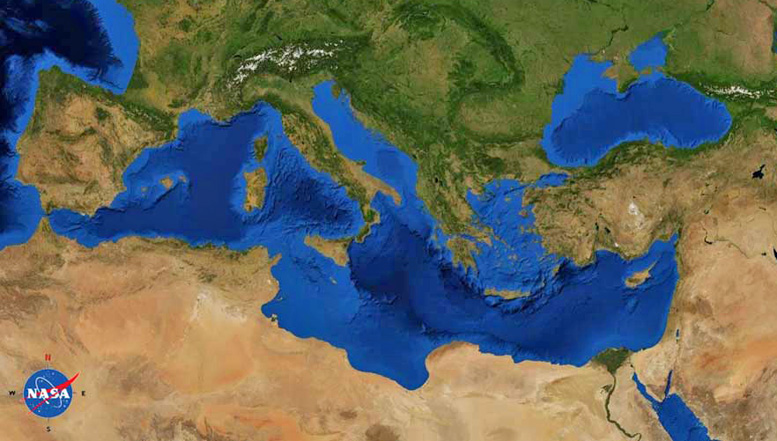
I may be the first to claim here that modern studies of Homer’s Odysseus offer a possible argument in favour of a Central Mediterranean Atlantis. Armin Wolf, the German historian, has made a 40-year study of 80 theories regarding the route taken by Odysseus. Around 30 of these included maps, some of which are included in Wolf’s book, Homers Reise: Auf den Spuren des Odysseus[669], a shorter version in English, including maps, is also available as a pdf file(a). It is obvious that although a reasonable degree of agreement exists between many of the theories regarding the position of the twelve specific locations recorded by Homer, those that confine the ‘wanderings’ to the Mediterranean, consistently keep all locations in the eastern basin and Central Mediterranean with the sole exception of the inclusion of Gibraltar which looks out of place on maps, with apparently nothing happening on the way there or on the return trip. Wolf’s carefully thought out route does not include Gibraltar and in my opinion, is a better reflection of actual Greek seafaring knowledge and naval capabilities at that time and adds a further suggestion, however inconclusive, that the Pillars of Heracles were situated in the Central Mediterranean. Wolfgang Geisthövel follows Wolf’s conclusions in Homer’s Mediterranean[1578].
Today’s leading theories regarding the location of Atlantis are virtually all related to the Mediterranean region. Between Morocco in the west and the Black Sea in the east, there is an embarrassment of suggested locations.
The principal objection to a Mediterranean location for Atlantis is frequently claimed to be the apparent physical extent of the island as described by Plato, which, if accepted as written, could not have fitted anywhere in that body of water. He gives us measurements for the plain adjacent to the city as being 240×360 miles. However, it is widely agreed that most of Plato’s dimensions are highly suspect and exaggerated by as much as a factor of ten.
On the other hand, if Atlantis had been located outside the Mediterranean, it is difficult to understand how the disaster that destroyed Atlantis could also have obliterated the Athenian army when the two locations would have been over 1700 miles apart. No single known natural disaster, such as earthquakes, could have affected the two cities at the same time as the text seems to imply. So if they were destroyed concurrently we must conclude that the two locations were situated in the same region and since Athens was clearly in the Mediterranean so must Atlantis have been. However, Plato does not explicitly say that the two armies were destroyed at the same time, although it seems to be implied.
As stated in the Invasion entry, all ancient empires expanded through the invasion of adjacent territories and so there is no good reason to think that Atlantis’ attack was not launched against an Athens that was within easy striking distance. This proximity could explain the inference that Atlantean and Athenian armies were destroyed simultaneously by some natural catastrophe!
Finally, please consider the following facts;
(1) Herodotus tells us that the ancient Greeks only knew of three continents, Asia, Europe and Libya (Africa) (Hist.4.42).
(2) Plato never called Atlantis a continent but consistently referred to it as an island.
(3) Finally, Herodotus also describes Sardinia as “the biggest island in the world.” (Hist.6.2)**, confirming a lack of knowledge of the world beyond the Mediterranean.
When all these details are taken together, they offer a compelling argument in favour of a Mediterranean Atlantis.
Sicily is larger in terms of area (25,708 km2 versus 24,090 km2). However, the coastal length of Sardinia is much greater than Sicily’s (1843 v 1115 km). Felice Vinci recently explained[019] how ancient seafarers measured territory by its coastal perimeter rather than by its area, as we do today. So Herodotus was correct according to the conventions of his day.
Cyprian Broodbank is a co-author with Giulio Lucarini of a paper(b) about Mediterranean Africa that “draws on a new surge in data to present the first up-to-date interpretative synthesis of this region’s archaeology from the start of the Holocene until the threshold of the Iron Age (9600–1000 bc).”
(a) Wayback Machine (archive.org)
(c) https://starshinetours.com/first-signs-of-weakening/ (link broken)
LaViolette, Paul A.
Paul A. LaViolette (1947-2022) held degrees in systems science and physics and wais an ardent catastrophist. He has published many books and articles on physics, astronomy, climatology, and psychology. He lived in New York and had an interest in metaphysics, mysticism, and music. His book on catastrophism[432] has an extensive section on Atlantis. He accepted that the destruction of Atlantis coincided with the end of the Ice Age around 9600 BC agreeing with the date given by Plato in his dialogues. However, LaViolette  insisted that the story must be taken metaphorically and on two levels. In the first metaphor, he sees Atlantis as the ice sheet that once covered North America, which bordered on the Atlantic northwest of the Pillars of Heracles. This glacier was linked to the European ice cover extending as far as Tyrrhenia, as noted by Plato. However, he did not explain Plato’s reference to ‘Atlantis’ also extending to Libya, where there is no evidence of glaciation during the last Ice Age. The second metaphor has Atlantis in Critias representing ‘the first particle of matter that arose at the dawn of creation’! In his book Genesis of the Cosmos[433] he proposed that Atlantis as well as other creation myths were intended as a symbolic representation of the electric field that forms the structure of a subatomic matter(b).
For anyone still interested, LaViolette had a website(a) outlining his radical ideas.
It is worth noting that LaViolette has argued that ancient man possessed extensive knowledge, which he believed ‘requires that we considerably revise our ideas about the level of technical sophistication that our prehistoric ancestors had achieved’[432.264]. However, classical writers, such as Aristotle, were quite ignorant of the fact that the earth revolved around the sun.
In 2014, LaViolette visited the Visko pyramid in Bosnia and published an extensively illustrated article in which he expressed his amazement at what he saw there and concluded(c) that he considers “this to be one of the most important archaeological excavations going on at this time on our planet.”
(a) The Sphinx Stargate (archive.org)
(b) http://etheric.com/subatomic-atlantis/ (offline?)
Kings of Atlantis
The Kings of Atlantis were, according to Plato, originally the sons of Poseidon and Cleito. They were ten in number and consisted of five sets of male twins. The firstborn was Atlas who was given authority over the others, each of whom controlled their own territory. Some commentators reacted with such incredulity to this story that they have either dismissed this detail or, in some cases, the entire Atlantis tale as pure fantasy. Of course, it is highly improbable, if not virtually impossible to accept that Cleito had five sets of all-male twins. However, we are dealing here with a myth that is an echo of the legends of many other cultures describing their antediluvian origins. Lenormant & Chevallier wrote [424] of this over a hundred years ago:
“…The ten kingdoms of Atlantis are perpetuated in all the ancient traditions. ‘In the number given by the Bible for the Antediluvian patriarchs we have the first instance of a striking agreement with the traditions of various nations. Other nations, to whatever epoch they carry back their ancestors…are constant to the sacred number of ten… In Chaldea (Babylon), Berosus, writing in the third century BC, numerates ten Antediluvian kings whose fabulous reigns extended to thousands of years. The legends of the Iranian race commence with the reign of ten Peisdadien (Poseidon?) kings…. In India we meet with the nine Brahmadikas, who, with Brahma, their founder, make ten, and who are called the Ten Petris, or Fathers. The Chinese count ten emperors, partaking of the divine nature, before the dawn of historical time. The Germans believed in the ten ancestors of Odin, and the Arabs in the ten mythical kings of the Adites”.
Cosmas Indicopleustes, in the 6th century AD, contended[1245] that Atlantis was the Garden of Eden and that Plato’s 10 kings of Atlantis were the 10 generations between Adam and Noah!
It may be just a coincidence, but Plato tells us that the domain of Atlantis extended as far as Tyrrhenia (modern Tuscany), just south of Rome, a city, which, according to legend, was also founded by twin brothers, Romulus and Remus. It has been claimed that the story of their origins is a variation of the story in the Hindu epic Ramayana, concerning the twin sons of king Sri Rama, Luva and Kusha(c). In the same region, Sicily has the legend of the divine Palici twins (Palikoi in Greek).
Aelian in his Natura Animalium has recorded [0619 xv.2] how the natives who live on the shores of ‘Ocean’ have a legend that tells of the Atlantean kings, who, to symbolise their authority from Poseidon, wore a crown reminiscent of the white band that ran around the forehead of the male ‘ram fish’ while their queens wore headgear made from the skins of ’marine ewes’.
“Ram-fishes, whose name has a wide circulation, although information about them is not very definite except in so far as displayed in works of art, spend the winter near the strait between Corsica and Sardinia and actually appear above water. And round about them swim dolphins of very great size.” (15.2)(f)
Although these animals have not been clearly identified, their size suggests a species of whale. I suggest that it was a fin whale which has a grey or white chevron marking on top of its head and is frequently found in the Strait of Bonifacio, between Corsica and Sardinia, at the southern end of the Pelagos Sanctuary.
“Fin whales, the second largest animal on the planet after blue whales, are represented in the Mediterranean by a resident population separated from the Atlantic.“(e)
So, it would appear obvious from this excerpt that Aelian did not have any doubt regarding the reality of Atlantis. Perhaps even more interesting is that Aelian seems to also associate these kings of Atlantis with Corsica and Sardinia. For me, this is compatible with a Central Mediterranean location for Atlantis.
Although Babylon is supposed to have had ten kings before the Flood, it must be noted that they reigned successively rather than concurrently, as was the case in Atlantis.
Attention has been drawn to the fact that Manetho (c. 300 BC), the Egyptian historian, called the first sequence of Egyptian god-kings ‘Auriteans’, which has been seen as suspiciously like a corruption of ‘Atlanteans‘.
Plato gives the names of the first ten kings as; Atlas, Gadeiros (Eumelos), Ampheres, Euaimon, Mneseos, Autochthon, Elasippos, Mestor, Azaes, Diaprepres (Critias 114b).
Some writers have attempted to link these names with specific regions; such as Atlas with Morocco, Eumelos (Gadeiros) with Gades (Cadiz) and Elasippos with Lisbon. Beyond these three, there is very little agreement. Lewis Spence correctly points out “Plato expressly states that these names had been Egyptianised from the Atlantean language by the priest of Sais, and subsequently Hellenised in Critias, so that there is little hope that they were transmitted in anything like their original form.” Spence also commented on the similarity of the Phoenician gods and the early kings of Atlantis, an idea suggested earlier by Ignatius Donnelly.
Reginald Fessenden claimed to have identified at least six of Plato’s Atlantean king-list with names in the Caucasus.(d)
Even more distant locations were proposed by the French cartographer, Guillaume Sanson (1633-1703), who generously distributed the Americas among the ten brothers, allocating Mexico to Atlas.
R. Cedric Leonard is convinced that Manetho’s list of Egyptian god-kings is in fact a list of the first kings of Atlantis and expands on this idea on his website(a). However, in his 1979 book, Quest for Atlantis[0130], Leonard has suggested that the kings of Atlantis were human-alien hybrids and that humans are the result of alien genetic experiments!!
Another site(b) identifies the kings of Atlantis with the pantheon of Phoenician gods, an idea first mooted by Ignatius Donnelly (part IV. chap. III). But Donnelly also suggested, unconvincingly, that the gods of the Greeks were just the deified kings of Atlantis (part IV, chap. II), while it is also possible that they were just personifications of natural phenomena.
An unusual feature of the Atlantean kings is the meeting every fifth and sixth year. Plato explains this as a way of honouring odd and even numbers. However, Bacon & Galanopoulos suggest[263.152] that in fact, this may have been the result of an awareness of the eleven-year cycles of rains. I believe this explanation is equally weak and the subject requires further investigation.
(a) https://web.archive.org/web/20170608084749/http:/www.atlantisquest.com:80/Hiero.html
(b) https://phoenicia.org/godidea.html#Atlantis
(c) https://vediccafe.blogspot.ie/2014/05/the-ramayana-in-roots-of-pre-christian.html
(d) The Deluged Civilisation of the Caucasus Isthmus [1012] (chap 3.29)
(e) https://tethys.org/activities-overview/research/fin-whales/
Erythraean Sea
The Erythraean Sea, as referred to by Herodotus (Histories Bk I.202) derives its name from the Greek for ‘red’. To the ancient Greeks, ‘Erythraean’ was a term used to refer to the Red Sea as well as the Persian Gulf and Indian Ocean. There is an ancient Persian tradition(a) that the Phoenicians migrated from the shores of the Erythraean Sea. This view is echoed at the very beginning (I.1) of The Histories of Herodotus.
The 1st century AD Periplus of the Erythraean Sea[1214] (translation by W.H. Schoff) makes it quite clear that the term refers to the region of the Indian Ocean. This can be read online(b).
Michael A. Cahill contends[0819.751] that the Black Sea was the Erythraean Sea referred to in the Book of Enoch.
Even more ‘exotic’ is the claim by W.C. Beaumont (see map) that the English Channel was in fact the Erythraean or Red Sea, along with the relocation of many other places mentioned in Exodus to sites in Britain.
It is claimed by some writers that Erythraean is an alternative name for the ‘Sea of Atlantis’. R. Cedric Leonard offers the following translation: “but the Caspian Sea is by itself, not connected to the other sea. For the sea navigated by the Greeks, also that outside the Pillars called the Atlantis Sea and the Erythraean, are one and the same”. Both Leonard and Anton Mifsud claim that this passage demonstrates that Herodotus identified the Erythraean with the Atlantis Sea. However, a careful reading of the context clearly shows that what Herodotus was describing was the extent to which the world’s oceans were connected, even though the Caspian was landlocked. Africa had already been circumnavigated eastward from Egypt on the instruction of Pharaoh Necho II around 600 BC, demonstrating the connection between the Mediterranean and the Red Sea.
Furthermore, if ‘the sea navigated by the Greeks’ is interpreted as the eastern Mediterranean, it could be used to support a Central Mediterranean location for the Pillars of Heracles. This remains an interpretation rather than a conclusion compelled by Herodotus’ text.
In turn, this would identify the western Mediterranean and/or Tyrrhenian Sea as the ‘Sea of Atlantis’, complementing Plato’s description of Atlantis extending as far as Tyrrhenia and Libya. It is worth noting that Giorgio Grongnet de Vasse envisaged the Island of Atlantis occupying the Gulf of Syrtis off the coast of Libya and designated the sea to the west of Malta as ‘Mare Atlantico Antico’ or the ancient Atlantic Sea.